


Questions to Ask Before Choosing a Whey Protein Supplement
Published On : Jul 7, 2026
Long before whey tubs of Whey Protein entered Indian bedrooms, hostels, and gym bags, people still built impressive strength. Labourers, farmers, fishermen, coconut tree climbers, and construction workers developed muscle through demanding physical work, regular meals, and years of movement. But not everyone has a job that is physically demanding and in today’s world, finding time for regular meals has also become a challenge.
But whey protein is not magic. It does not build muscle while you scroll Instagram. It does not replace training. It does not fix a poor diet. But when used correctly, it can be a convenient, high-quality way to meet daily protein needs, especially for people who train, struggle to eat enough protein, or need a practical option between meals.
This series on Whey Protein addresses any and all questions you may have about it in 2 parts.
What Is Whey Protein and How Is It Made?
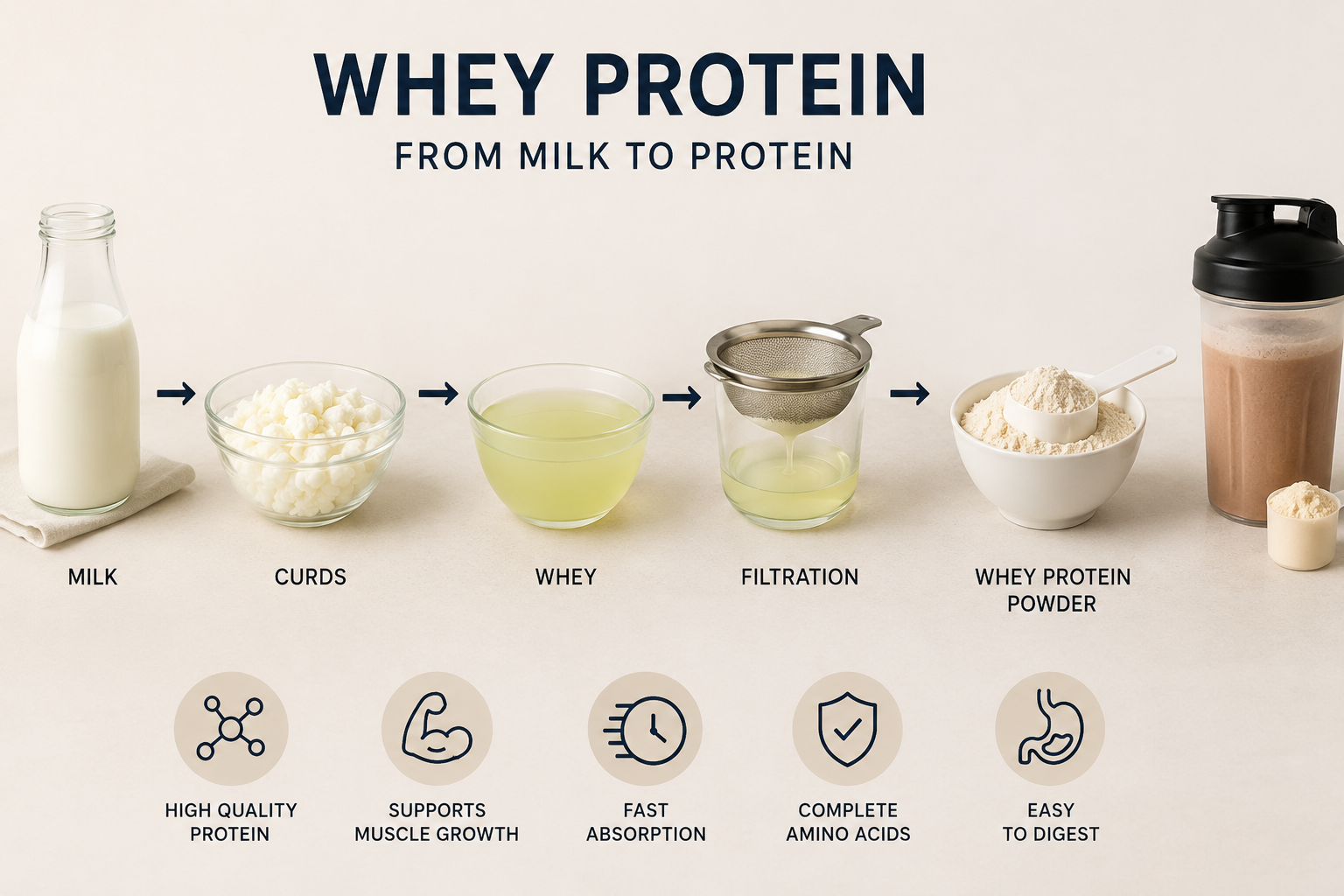
Whey is a protein found in milk. During cheese-making, milk separates into solid curds and liquid whey. This liquid whey is filtered, processed, and dried into powder.
Whey protein is valued because it is a complete protein, meaning it contains all nine essential amino acids. It is also rich in leucine, an amino acid closely linked with muscle protein synthesis.
Who Needs to Take Whey Protein?
Not everyone needs whey protein. It is useful for people who cannot consistently meet protein needs through food.
It may help:
- Gym-goers and athletes
- People doing strength training
- Those with busy schedules
- Vegetarians who struggle to reach protein targets
- Older adults with low appetite
- People recovering from illness, only under medical guidance
If your daily meals already provide enough protein, whey is optional—not compulsory.
Why Choose Whey Protein Over Other Protein Supplements?
Whey is popular because it is:
- High in protein quality
- Fast-digesting
- Easy to mix
- Convenient after workouts
- Usually rich in essential amino acids
Compared with some plant proteins, whey often has a higher leucine content and digestibility. However, plant proteins are still valid options, especially for vegans or people avoiding dairy.
What Are the Different Types of Whey Protein?
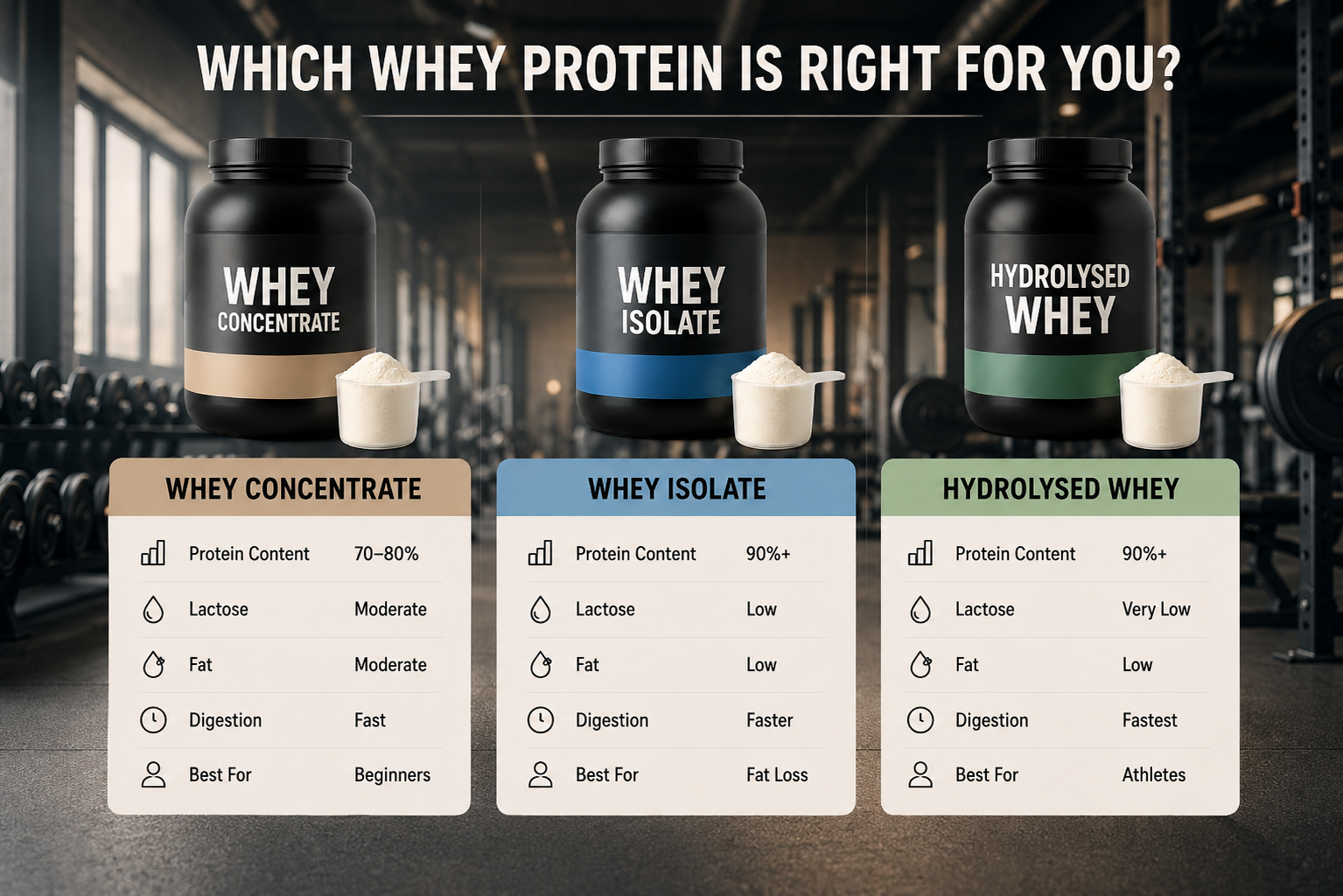
The three common types are:
- Whey concentrate: Contains protein along with some lactose, fat, and carbohydrates. Usually budget-friendly.
- Whey isolate: More filtered, higher protein percentage, lower lactose and fat.
- Hydrolysed whey: Pre-digested into smaller peptides, usually easier to digest but more expensive.
Whey Isolate vs Whey Concentrate: Which Is Better?
Neither is automatically “better.” It depends on need.
Choose whey concentrate if you want an affordable everyday protein supplement and tolerate dairy well. Products such as Wellbeing Nutrition 100% Raw Whey Protein and MuscleBlaze Whey Protein fit this basic daily-protein category.
Choose whey isolate if you want higher protein with lower carbohydrates, lower fat, and lower lactose. Options such as Isopure Low Carb Whey Isolate, Isopure Zero Carb Whey Isolate, and QNT Prime Whey Isolate and Hydrolysate are more suited for lean-protein goals.
How Do You Choose the Right Whey Protein for You?
Start with your goal, not the flavour.
Which Whey Protein Is Better for Weight Loss?
For weight loss, choose a lean protein powder with:
- High protein per serving
- Low added sugar
- Low fat and carbohydrate content
- No unnecessary calorie-heavy additions
A whey isolate such as Isopure Low Carb or Isopure Zero Carb may suit users who want protein support without many extra calories. However, weight loss still depends on total calorie intake, diet quality, and activity.
Which Whey Protein Is Better for Muscle Gain?
For muscle gain, choose a whey protein that provides enough protein per serving and fits your training routine. Whey concentrate, isolate, or blends can all work if total protein intake is adequate.
Products such as MuscleBlaze Biozyme Performance Whey, Optimum Nutrition Performance Whey, and PhD 100% Whey Protein fit this general muscle recovery and training-support category.
Which Whey Protein Is Better for Bulking?
For bulking, the goal is not just protein but a calorie surplus. This is where mass gainers may be considered.
Products such as MuscleBlaze Mass Gainer XXL, Avvatar Mass Gainer, Labrada Muscle Mass Gainer, and GNC Pro Performance Weight Gainer are designed for people who struggle to gain weight through meals alone.
However, mass gainers are not ideal for everyone. They can be calorie-dense and may contain added carbohydrates, so they should be used only when weight gain is the actual goal.
Can Whey Protein Powder Be Cooked?
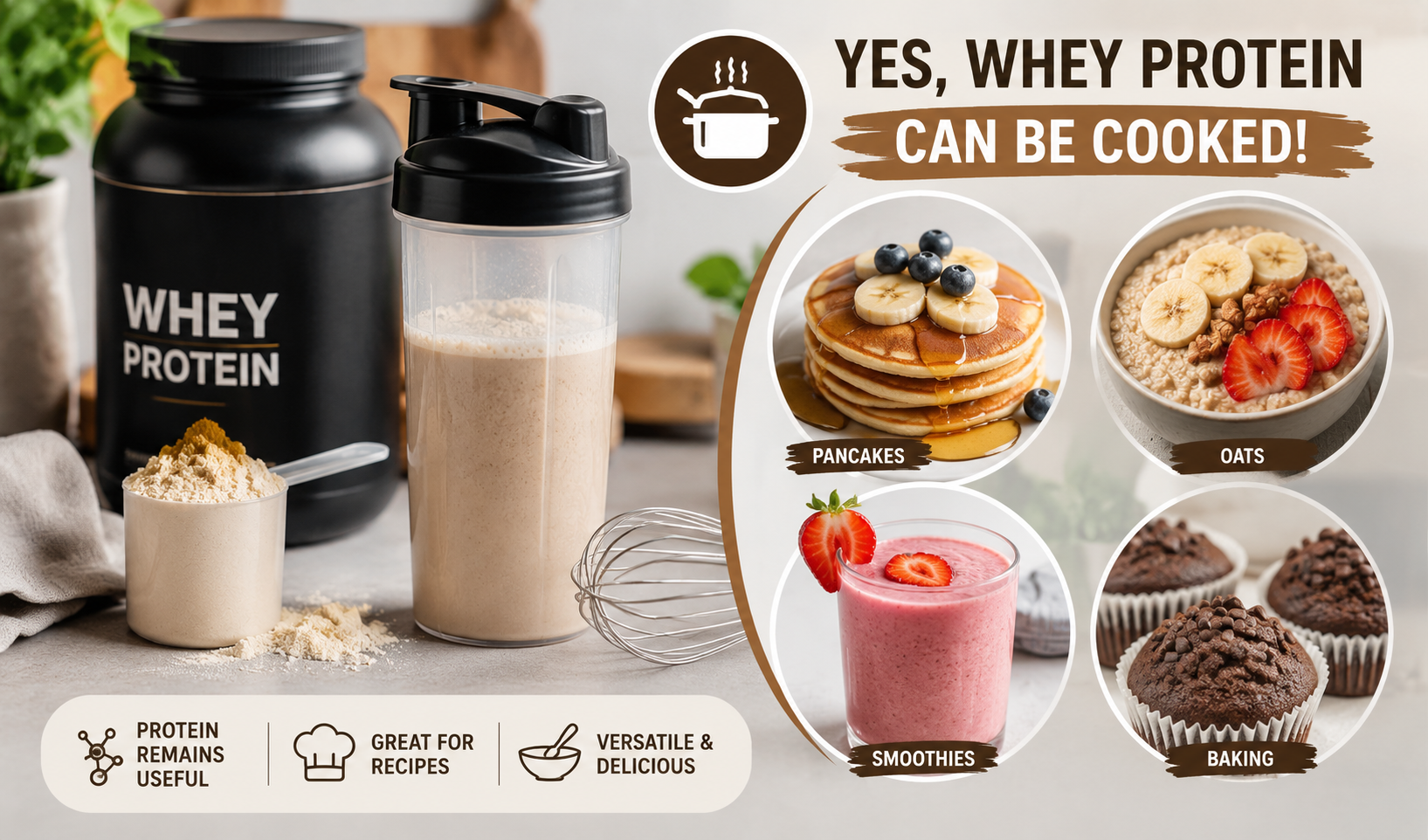
Yes, whey protein can be used in recipes such as pancakes, oats, smoothies, or baked snacks. Heat may denature the protein, but denaturing does not mean the protein becomes useless. It simply changes the structure, like when an egg is cooked.
Avoid adding whey directly to boiling liquid, as it may clump or affect texture. Mix it into warm or cooled preparations for better results.
Are Whey Protein Supplements Vegetarian?
Most whey proteins are lacto-vegetarian, because they are derived from milk. They are not vegan.
In India, many whey products carry a green vegetarian symbol, but buyers should still check labels for ingredients, enzymes, and flavouring agents.
When Is the Right Time to Take Whey Protein?
The best time is the time that helps you meet your daily protein target consistently.
Common timings include:
- After workout
- Between meals
- With breakfast
- After long gaps without protein
For muscle gain, spreading protein across the day matters more than obsessing over a tiny “post-workout window.”
Which Whey Protein Is Better for Beginners?
Beginners should keep it simple.
A good beginner whey should have:
- Clear protein content
- Simple ingredient list
- Reasonable price
- Good mixability
- No unnecessary stimulant blends
Whey concentrate or a basic whey blend is usually enough. Products such as MuscleBlaze Whey Protein, Wellbeing Nutrition Raw Whey, or Optimum Nutrition Performance Whey can fit beginner needs depending on budget and tolerance.
Which Whey Protein Is Better for Women?
Women do not need a separate “female whey” unless there is a specific nutritional requirement. Protein needs depend on body weight, diet, activity level, and fitness goal—not gender marketing.
For women aiming for fat loss or lean muscle, a low-sugar whey isolate or clean whey blend may be useful. For women with PCOS, diabetes, kidney disease, pregnancy, or breastfeeding, medical advice is recommended before starting supplements.
Can Whey Protein Compensate for Low Protein Intake from Diet?
Whey can help fill a protein gap, but it should not replace a balanced diet.
Natural protein sources provide more than protein. They also offer fibre, healthy fats, vitamins, minerals, and satiety.
Good food sources include:
- Eggs
- Milk, curd, paneer
- Fish and chicken
- Soy, tofu, tempeh
- Dal, chana, rajma
- Nuts and seeds
Whey is convenient, measurable, and easy to digest for many people. But the best fitness practice is balance: eat protein-rich meals, train consistently, sleep well, hydrate properly, and use whey only to cover what food does not.
How to Buy Quality Whey Protein Supplements Online?
Before buying whey online, check:
- Brand reputation
- Protein per 100g
- Sugar and calorie content
- Ingredient list
- FSSAI details
- Batch number and expiry date
- Authentic seller or platform
- Sealed packaging
- Return policy
- Third-party testing, if available
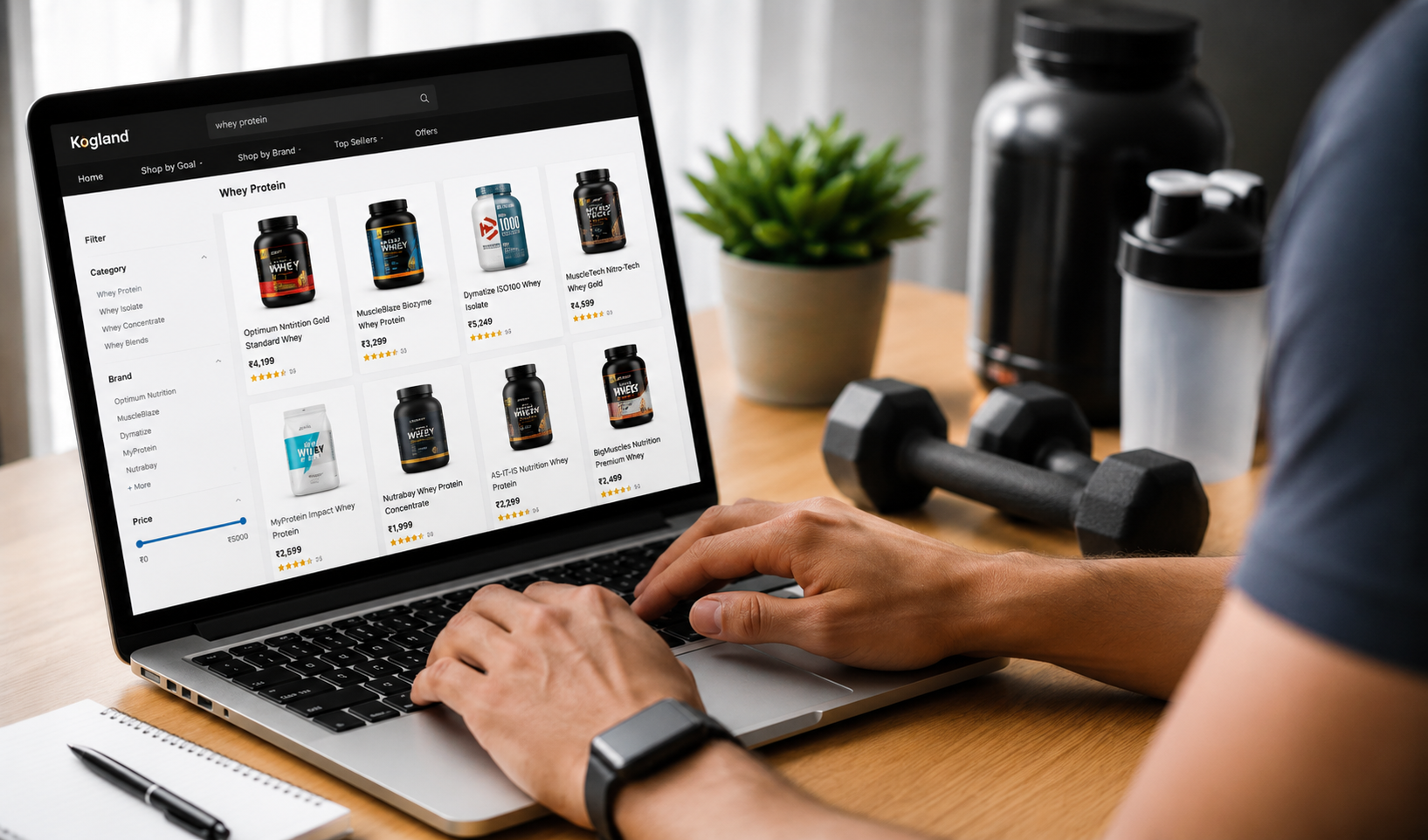
Popular whey protein brands in India include MuscleBlaze, Optimum Nutrition, Isopure, Avvatar, GNC, QNT, Labrada, PhD, Wellbeing Nutrition, and MuscleTech.
Major online buying sources include official brand websites, reputed pharmacy platforms, established e-commerce marketplaces, fitness nutrition stores, and healthcare supply platforms such as Kogland, where several whey proteins, isolates, and mass gainers are listed.
Whey protein is useful, but only when it fits your real need. It is not a shortcut to muscle, weight loss, or fitness. It is simply a convenient protein source.
Choose whey based on your goal, digestion, budget, diet, and activity level. And before buying the biggest tub with the loudest label, ask the most important question: “Do I actually need this, and does it fit my routine?”
Author Details
 Written By - Dr Afzal Jaleel (BDS)
 Reviewed By - Dr Navami S M (BDS, Product Specialist)
Leave a comment