


Questions to Ask Before Choosing a Whey Protein Supplement
Published On : Jul 9, 2026
In Part 1(what is whey protein?), we established that whey protein is not a magic muscle potion, a replacement for food, or a shortcut to fitness. It is simply a convenient protein source that can help when your diet, routine, or training goals create a genuine protein gap.
But convenience is exactly where the next problem begins.
Because once something comes in a tub, tastes like dessert, and is sold next to words like “performance,” “lean,” “mass,” and “recovery,” it becomes very easy to forget that it still affects the body. Whey protein may be safe for many people, but “safe” does not mean “suitable for everyone,” and “more protein” does not always mean “better health.”
So before adding whey to your daily routine, it is worth asking the safety questions first.
Are Whey Protein Supplements Safe?
For most healthy adults, whey protein is generally safe when taken in appropriate amounts and as part of a balanced diet. It is widely used by athletes, gym-goers, and people who need help meeting protein requirements.
However, safety depends on:
- Total daily protein intake
- Kidney and liver health
- Digestive tolerance
- Existing medical conditions
- Product quality
- Added sugar, calories, and other ingredients
The main issue is not whey itself, but misuse: taking too much, using poor-quality products, ignoring medical conditions, or treating protein powder as a replacement for meals.
Who Should Not Take Whey Protein?
Some people should avoid whey or use it only after medical advice.
This includes:
- People with milk allergy
- Individuals with chronic kidney disease
- People advised to restrict protein intake
- Those with significant liver disease
- Pregnant or breastfeeding women unless approved by a doctor
- Children unless prescribed
- Anyone with unexplained weight loss, swelling, persistent digestive symptoms, or abnormal blood reports
People with lactose intolerance may tolerate whey isolate better than whey concentrate, because isolates generally contain less lactose. However, milk allergy is different from lactose intolerance. A person with a true milk allergy should avoid whey.
Can People Who Don’t Work Out Take Whey Protein?
Yes, but only if they actually need more protein.

Whey is not reserved for bodybuilders. A person who does not go to the gym may still need protein support if their diet is low in protein, appetite is poor, or a healthcare professional recommends it.
However, if someone is sedentary and already eating enough protein, adding whey may only add unnecessary calories. Protein supports the body, but muscle growth still needs physical stimulus. Without movement or resistance training, whey alone will not build a stronger body.
Can Whey Protein Support Non-Gym Workouts?
Yes. Whey can support protein intake for people who do non-gym activities such as:
- Running
- Cycling
- Swimming
- Sports
- Yoga with strength elements
- Martial arts
- Dance
- Manual labour
- Home workouts

The body does not care whether the workout happened in a gym or a field. It responds to effort, recovery, food, and consistency.
Is It Safe to Take Other Supplements with Whey Protein?
It depends on the supplement.
Whey is often combined with creatine, multivitamins, omega-3, or electrolytes without issues in healthy adults. But stacking supplements blindly can create problems.
Be careful with:
- Pre-workouts containing high caffeine
- Fat burners or stimulant blends
- Multiple protein products in one day
- Creatine use in people with kidney concerns
- Multivitamins that overlap with other supplements
- Mass gainers if weight gain is not the goal
A simple rule works well: add one supplement at a time, know why you are taking it, and avoid combining products just because fitness influencers do.
How Much Whey Protein Can Be Safely Consumed in a Day?
There is no single safe amount for everyone. It depends on body weight, activity, diet, and health status.
For many active adults, total daily protein intake commonly falls around 1.4–2.0 g/kg/day, depending on training. A typical whey serving provides about 20–30 g protein.
For most people, one scoop a day is usually enough if it is only filling a diet gap. Some athletes may use more, but total daily protein from both food and supplements should be considered.
People with kidney disease, diabetes-related kidney complications, liver disease, or heart failure should not decide protein intake casually. Their safe limit must be personalised.
What Are the Possible Side Effects of Whey Protein?
Possible side effects include:
- Bloating
- Gas
- Nausea
- Loose stools
- Stomach discomfort
- Acne flare-ups in some individuals
- Unwanted weight gain if calories are excessive
These effects are more common when whey is taken in large quantities, mixed with milk by lactose-sensitive users, or chosen in the form of high-calorie mass gainers.
Switching to whey isolate, reducing serving size, or taking it with water may help some users. Persistent symptoms should not be ignored.
Can Whey Protein Cause Kidney Stones?
Whey protein does not directly “cause kidney stones” in every healthy person. But excessive protein intake, poor hydration, and high intake of animal protein may contribute to stone risk in susceptible individuals.
People with a history of kidney stones should be careful with high-protein diets and should discuss protein intake with a doctor or dietitian. Hydration is especially important.
Anyone with chronic kidney disease must be more cautious because protein requirements may need restriction or adjustment.
Is Whey Protein Safe for Diabetics?
Whey protein may be suitable for some people with diabetes, but product choice matters.
Diabetics should avoid protein powders or mass gainers with high sugar, high carbohydrate loads, or unclear ingredients. Low-carb or zero-carb whey isolates may be more appropriate when protein supplementation is recommended.
Products such as Isopure Zero Carb Whey Isolate and Isopure Low Carb Whey Isolate, fit this low-carbohydrate category. However, diabetic users should still check the label and consult a doctor or dietitian, especially if they have kidney involvement.
Can You Drink Alcohol While Taking Whey Protein?
Occasional alcohol intake does not create a special chemical reaction with whey protein. But alcohol can interfere with fitness goals, recovery, sleep, hydration, and food choices.
If someone is taking whey for muscle recovery, drinking heavily after training works against the purpose.
Does Alcohol Affect Muscle Recovery?
Yes. Alcohol can reduce muscle protein synthesis after exercise, impair sleep quality, worsen dehydration, and delay recovery.
This does not mean one drink ruins months of training. But frequent drinking, especially after workouts, can blunt progress.
Does Alcohol Reduce Protein Absorption?
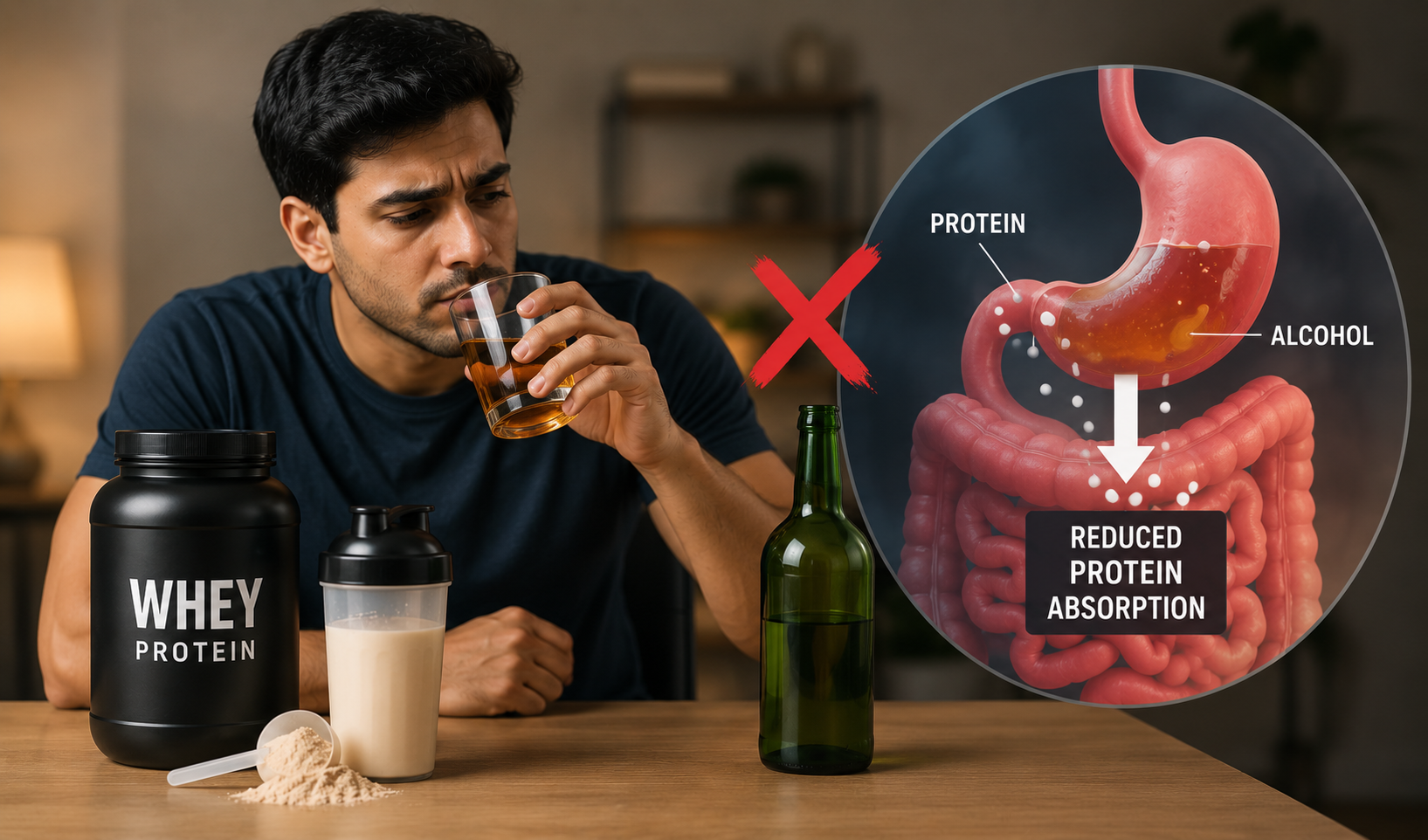
Alcohol may not simply “block” all protein absorption, but it can reduce the body’s ability to use protein effectively for recovery and muscle repair. The bigger concern is impaired muscle protein synthesis, poor sleep, dehydration, and lower training quality.
So the practical advice is simple: do not treat whey as damage control for alcohol-heavy habits.
Can Cardiac Patients Take Whey Protein?
Some cardiac patients may take whey protein, but only after medical guidance. The answer depends on the person’s heart condition, kidney function, medications, weight goals, and total diet.
Protein is important for muscle maintenance, especially in older adults. But heart patients must avoid unnecessary calories, high sugar, excess sodium, and poorly chosen supplements.
Which Type of Whey Protein Is Best for Heart Patients?
If a doctor approves whey, a simple low-sugar, low-fat, low-carb whey isolate is usually a cleaner option than mass gainers or calorie-heavy blends.
Heart patients should avoid:
- Mass gainers unless specifically advised
- High-sugar protein powders
- Stimulant-containing blends
- Products with unclear ingredients
- Excessive sodium
How Much Whey Protein Can a Cardiac Patient Consume?
There is no universal dose. A cardiac patient’s protein intake should be personalised based on:
- Age
- Muscle mass
- Kidney function
- Heart failure status
- Weight goals
- Appetite
- Current diet
- Doctor or dietitian advice
For some, a small serving may help fill a protein gap. For others, extra protein may not be appropriate.
When Should Heart Patients Avoid Whey Protein?
Heart patients should avoid whey unless medically cleared if they have:
- Kidney disease
- Fluid restriction
- Advanced heart failure
- Uncontrolled diabetes
- Severe digestive intolerance
- Advice to restrict protein
- Recent hospitalisation without dietary review
They should also avoid using whey to replace balanced meals unless advised.
Choosing a Quality Whey Protein Supplement
Before adding whey protein to your routine, it's important to choose a product from a trusted brand. Comparing whey protein supplements allows you to review the protein source, ingredients, nutritional information, serving size, and certifications before making a decision. Choosing a high-quality supplement that matches your health needs and fitness goals is just as important as deciding whether you need one.
Whey protein can be safe, useful, and convenient. But it is not automatically right for everyone.
The healthiest approach is still boring, reliable, and effective: eat balanced meals, include natural protein sources, train consistently, sleep well, hydrate properly, and use whey only where it genuinely fits.
A protein powder should support your fitness routine, not become the centre of it. Before choosing one, ask: Do I need it? Is it safe for me? Does it fit my health condition, diet, and training?
If the answer is unclear, get advice before the scoop becomes a habit.
Author Details
 Written By - Dr Afzal Jaleel (BDS)
 Reviewed By - Dr Navami S M (BDS, Product Specialist)
References:
1. International Society of Sports Nutrition. Position Stand: Protein and Exercise
2. National Kidney Foundation. CKD Diet: How Much Protein Is the Right Amount?
3. PubMed. International Society of Sports Nutrition Position Stand: Protein and Exercise
4. Chiang SW, et al. Whey Protein Supplementation Improves Postprandial Glycemia in Type 2 Diabetes
5. PubMed. Alcohol Ingestion Impairs Maximal Post-Exercise Rates of Myofibrillar Protein Synthesis
Leave a comment