


Azithromycin: Uses, How It Works, Common Side Effects, Expert Advice
Published On : Jun 23, 2026
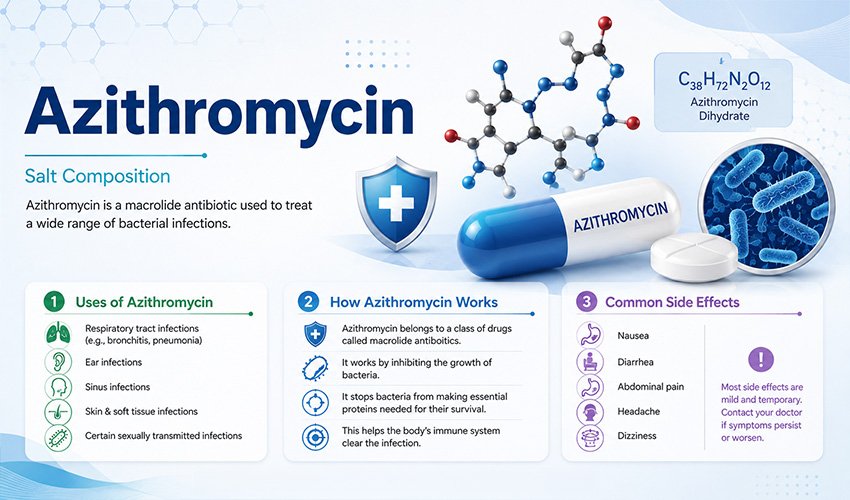
Azithromycin is a prescription antibiotic. It is commonly used to treat bacterial infections affecting the respiratory tract, skin, ears, eyes, and certain sexually transmitted infections. It works by stopping the growth of susceptible bacteria, allowing the body's immune system to eliminate the infection. Azithromycin should only be used under the guidance of a qualified healthcare professional and is not effective against viral illnesses such as the common cold or flu.
Uses of Azithromycin
Doctors prescribe Azithromycin for the treatment of various bacterial infections, including:
- Upper and lower respiratory tract infections
- Community acquired pneumonia
- Bronchitis
- Sinus infections (sinusitis)
- Ear infections (otitis media)
- Throat and tonsil infections
- Skin and soft tissue infections
- Certain eye infections
- Some sexually transmitted bacterial infections, such as uncomplicated chlamydial infections
- Other bacterial infections as determined by a healthcare provider
The exact use depends on the type of bacteria involved and local treatment guidelines.
How Azithromycin Works
Azithromycin works by inhibiting bacterial protein synthesis. It binds to the 50S ribosomal subunit of susceptible bacteria, preventing them from producing essential proteins needed for growth and reproduction. As a result, the bacteria stop multiplying, enabling the immune system to control and eliminate the infection.
Common Side Effects
Like all medicines, Azithromycin may cause side effects, although not everyone experiences them. Common side effects include:
- Nausea
- Diarrhea
- Stomach pain or abdominal discomfort
- Vomiting
Seek immediate medical attention if severe allergic reactions, persistent diarrhea, yellowing of the skin or eyes, irregular heartbeat, or severe skin reactions occur.
Expert Advice
- Take Azithromycin exactly as prescribed by your healthcare provider.
- Complete the full course of treatment even if symptoms improve before finishing the medication.
- Do not skip doses or stop treatment early, as this may contribute to antibiotic resistance.
- Inform your doctor about any liver disease, kidney disease, heart rhythm disorders, or allergies before starting treatment.
- Tell your healthcare provider about all medications and supplements you are taking to avoid potential interactions.
- Use antibiotics only for bacterial infections and never self-medicate without professional advice.
- Contact your doctor if symptoms do not improve or worsen during treatment.
FAQs
1. What is Azithromycin used for?
Azithromycin is primarily used to treat a variety of bacterial infections affecting the lungs, throat, ears, skin, and other parts of the body.
2. Does Azithromycin work for viral infections?
No. Azithromycin is an antibiotic and does not treat viral infections such as the common cold, influenza, or most viral sore throats.
3. Can I stop taking Azithromycin once I feel better?
No. You should complete the entire prescribed course unless your healthcare provider advises otherwise.
4. What should I do if I miss a dose?
Take the missed dose as soon as you remember. If it is nearly time for your next scheduled dose, skip the missed dose and continue your regular schedule. Do not take a double dose.
5. Is Azithromycin safe during pregnancy or breastfeeding?
Its use during pregnancy or breastfeeding should only be based on a healthcare provider's assessment of the benefits and potential risks.
6. Can Azithromycin cause diarrhea?
Yes. Mild diarrhea is a common side effect. However, severe or persistent diarrhea should be reported to a healthcare professional promptly.
7. Can I drink alcohol while taking Azithromycin?
Alcohol does not directly interact with Azithromycin, but avoiding excessive alcohol consumption may help reduce stomach irritation and support recovery from infection.
Medicines Containing Azithromycin
| Medicine Name | Manufacturer |
| Azicip 500 mg Tablet - Strip of 3 | Cipla Ltd. |
| Azee 250 mg Tablet - Strip of 10 | Cipla Ltd. |
| Azimyce 500 mg Tablet - Strip of 3 | Bio Schutz Pharmaceuticals Pvt Ltd |
| Hhazi 250 Tablet - Strip of 10 | Hegde and Hegde Pharmaceutica LLP |
| Azee 500 mg Tablet - Strip of 5 | Cipla Ltd. |
| Azax 500 Tablet - Strip of 3 | Sun Pharmaceutical Industries Ltd |
| Microbact 500 mg Tablet - Strip of 5 | Micro Labs Limited |
| Azirin 500 mg Tablet – Strip of 10 | Rhine Biogenics Pvt Ltd |
| Aziprl 500 mg Tablet - Strip of 3 | Pristine Pearl Pharma Pvt.Ltd |
| Aziprl 200 Suspension - 30ml | Pristine Pearl Pharma Pvt.Ltd |
Medical Disclaimer
This content is for informational purposes only and should not be considered medical advice. Always consult a qualified healthcare professional before using any medication.
Author Details
 Created By : Dr Navami S M (BDS, Product Specialist)
 Reviewed By : Arul Rajan G (Pharmacist)
Leave a comment