



- Effective treatment for bacterial conjunctivitis.
- Helps in managing keratitis caused by susceptible bacteria.
- Indicated for otitis externa, providing relief from ear infections.
- Reduces inflammation and discomfort associated with eye and ear infections.
- Facilitates faster recovery from bacterial infections.
- Suitable for both adults and pediatric patients.
- Easy-to-use dropper bottle for precise dosing.
- Minimizes the risk of systemic absorption due to localized application.
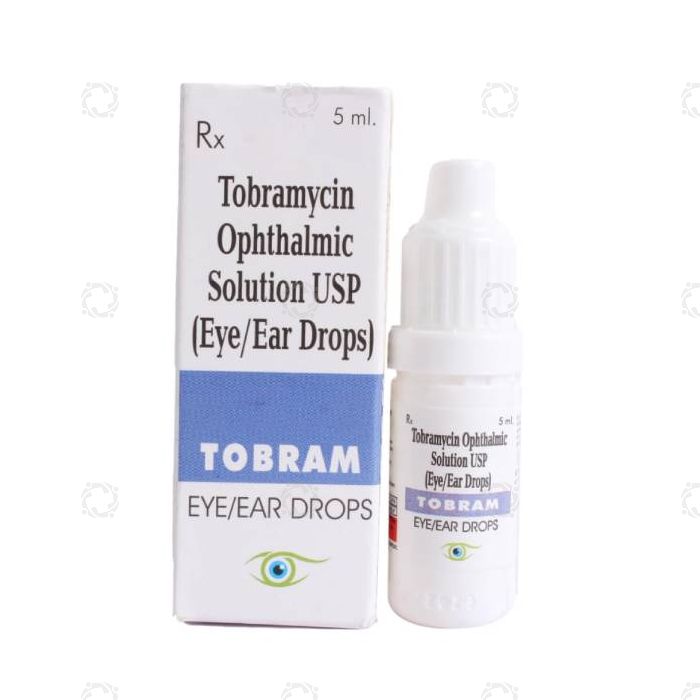
Tobram Eye/Ear Drops - 5 ml
Prescription Required
Compositions : Tobramycin 0.3% w/v
₹64.60
(Incl. GST)
MRP :
(Incl. GST)
MRP :
Out of stock
Delivery within 2 to 7 Working Days
Manufacture/Marketer: Pharmtak Ophthalmics (I) Pvt. Ltd
Door Step Delivery
Quick and Secure
No Hidden Charges
Pay only what's shown
18K Pincodes Served
With Trust & Reliability
Description
Tobram Eye/Ear Drops is a sterile ophthalmic and otic solution that contains the active ingredient tobramycin, an aminoglycoside antibiotic. This medication is primarily used for the treatment of bacterial infections affecting the eyes and ears. Tobramycin works by inhibiting bacterial protein synthesis, effectively stopping the growth of bacteria responsible for infections. The formulation is designed for direct application to the affected areas, ensuring targeted delivery of the medication. Tobram Eye/Ear Drops are indicated for conditions such as bacterial conjunctivitis, keratitis, and otitis externa, among others. The drops are available in convenient packaging that allows for easy administration, making it suitable for both adults and children. The product is well-tolerated and has a favorable safety profile when used as directed. It is essential to follow the prescribed dosage and administration guidelines to achieve optimal therapeutic outcomes while minimizing the risk of side effects. Tobram Eye/Ear Drops are an essential part of the therapeutic arsenal against bacterial infections in the eye and ear, providing relief from symptoms and promoting healing.
Product Details
Uses & Benefits
How Tobram Eye/Ear Drops works
- Tobramycin inhibits bacterial protein synthesis by binding to the 30S ribosomal subunit.
- This action disrupts the production of essential proteins required for bacterial growth and replication.
- Effective against a wide range of Gram-negative and some Gram-positive bacteria.
- Localized application reduces systemic exposure and potential side effects.
How to use Tobram Eye/Ear Drops
- Administer Tobram Eye/Ear Drops as directed by your healthcare provider.
- For eye infections, instill 1-2 drops into the affected eye(s) every 4-6 hours.
- For ear infections, apply 3-4 drops into the affected ear(s) twice daily.
- Ensure the dropper tip does not touch any surfaces to maintain sterility.
- Shake the bottle gently before use if instructed by your healthcare provider.
- Continue using the drops for the full prescribed duration, even if symptoms improve.
- If a dose is missed, administer it as soon as remembered unless it's close to the next scheduled dose.
- Do not exceed the recommended dosage without consulting your healthcare provider.
Lifestyle Advice
- Maintain good hygiene practices to prevent reinfection.
- Avoid touching or rubbing your eyes or ears unnecessarily.
- Keep your hands clean by washing them frequently, especially before administering drops.
- Limit exposure to irritants such as smoke or strong odors that may exacerbate symptoms.
- Stay hydrated and maintain a balanced diet to support overall health during treatment.
- Follow up with your healthcare provider if symptoms persist or worsen after starting treatment.
Safety Advice
Side Effects
- Common side effects may include temporary stinging or burning upon application.
- Some patients may experience redness or itching in the treated area.
- Serious side effects are rare but can include allergic reactions such as rash, itching, or swelling.
- If you notice any signs of severe irritation or worsening symptoms, seek medical attention promptly.
- Report any unusual symptoms to your healthcare provider for further evaluation.
Precautions and Warnings
- Avoid using Tobram Eye/Ear Drops if you have a known allergy to tobramycin or any other components of the formulation.
- Use with caution in patients with pre-existing kidney conditions; consult your healthcare provider before use.
- Pregnant or breastfeeding women should discuss potential risks with their healthcare provider before using this medication.
- Avoid contact with eyes or ears other than the intended application site to prevent contamination.
- Do not share this medication with others, even if they have similar symptoms.
- If you experience dizziness or blurred vision after application, refrain from driving or operating heavy machinery until you feel stable.
FAQs
1. Is Tobram Eye/Ear Drops safe for children?
Yes, Tobram Eye/Ear Drops can be used in pediatric patients as directed by a healthcare provider.
2. Can I use Tobram Eye/Ear Drops if I am pregnant?
Consult your healthcare provider before using Tobram Eye/Ear Drops during pregnancy.
3. What should I do if I miss a dose?
If you miss a dose, take it as soon as you remember unless it's almost time for your next dose.
4. Are there any food interactions with Tobram Eye/Ear Drops?
There are no known food interactions with Tobram Eye/Ear Drops.
5. How should I store Tobram Eye/Ear Drops?
Store Tobram Eye/Ear Drops at room temperature away from direct sunlight and keep out of reach of children.
6. Can I drive after using Tobram Eye/Ear Drops?
Be cautious when driving after using Tobram Eye/Ear Drops, as temporary blurriness may occur.
7. What should I do if I experience side effects?
Contact your healthcare provider immediately if you experience any severe side effects.
Yes, Tobram Eye/Ear Drops can be used in pediatric patients as directed by a healthcare provider.
2. Can I use Tobram Eye/Ear Drops if I am pregnant?
Consult your healthcare provider before using Tobram Eye/Ear Drops during pregnancy.
3. What should I do if I miss a dose?
If you miss a dose, take it as soon as you remember unless it's almost time for your next dose.
4. Are there any food interactions with Tobram Eye/Ear Drops?
There are no known food interactions with Tobram Eye/Ear Drops.
5. How should I store Tobram Eye/Ear Drops?
Store Tobram Eye/Ear Drops at room temperature away from direct sunlight and keep out of reach of children.
6. Can I drive after using Tobram Eye/Ear Drops?
Be cautious when driving after using Tobram Eye/Ear Drops, as temporary blurriness may occur.
7. What should I do if I experience side effects?
Contact your healthcare provider immediately if you experience any severe side effects.
Instructions
Directions for Use
Use only as prescribed by your physician.
Storage and Disposal
Please refer to the product label for storage information.
More Information
| SKU | 450223 |
|---|---|
| Country of Manufacture | India |
| Manufacturer Address | Pharmtak Ophthalmics (I) Pvt. Ltd |
| Return/Buy Back policy | Non-returnable |
| Prescription Required | Yes |
| Storage | Please refer to the product label for storage information. |
| Seller | Kogland Commerce Pvt Ltd (TN) |
Tobram Eye/Ear Drops is a sterile ophthalmic and otic solution that contains the active ingredient tobramycin, an aminoglycoside antibiotic. This medication is primarily used for the treatment of bacterial infections affecting the eyes and ears. Tobramycin works by inhibiting bacterial protein synthesis, effectively stopping the growth of bacteria responsible for infections. The formulation is designed for direct application to the affected areas, ensuring targeted delivery of the medication. Tobram Eye/Ear Drops are indicated for conditions such as bacterial conjunctivitis, keratitis, and otitis externa, among others. The drops are available in convenient packaging that allows for easy administration, making it suitable for both adults and children. The product is well-tolerated and has a favorable safety profile when used as directed. It is essential to follow the prescribed dosage and administration guidelines to achieve optimal therapeutic outcomes while minimizing the risk of side effects. Tobram Eye/Ear Drops are an essential part of the therapeutic arsenal against bacterial infections in the eye and ear, providing relief from symptoms and promoting healing.
Uses & Benefits
- Effective treatment for bacterial conjunctivitis.
- Helps in managing keratitis caused by susceptible bacteria.
- Indicated for otitis externa, providing relief from ear infections.
- Reduces inflammation and discomfort associated with eye and ear infections.
- Facilitates faster recovery from bacterial infections.
- Suitable for both adults and pediatric patients.
- Easy-to-use dropper bottle for precise dosing.
- Minimizes the risk of systemic absorption due to localized application.
How Tobram Eye/Ear Drops works
- Tobramycin inhibits bacterial protein synthesis by binding to the 30S ribosomal subunit.
- This action disrupts the production of essential proteins required for bacterial growth and replication.
- Effective against a wide range of Gram-negative and some Gram-positive bacteria.
- Localized application reduces systemic exposure and potential side effects.
How to use Tobram Eye/Ear Drops
- Administer Tobram Eye/Ear Drops as directed by your healthcare provider.
- For eye infections, instill 1-2 drops into the affected eye(s) every 4-6 hours.
- For ear infections, apply 3-4 drops into the affected ear(s) twice daily.
- Ensure the dropper tip does not touch any surfaces to maintain sterility.
- Shake the bottle gently before use if instructed by your healthcare provider.
- Continue using the drops for the full prescribed duration, even if symptoms improve.
- If a dose is missed, administer it as soon as remembered unless it's close to the next scheduled dose.
- Do not exceed the recommended dosage without consulting your healthcare provider.
Lifestyle Advice
- Maintain good hygiene practices to prevent reinfection.
- Avoid touching or rubbing your eyes or ears unnecessarily.
- Keep your hands clean by washing them frequently, especially before administering drops.
- Limit exposure to irritants such as smoke or strong odors that may exacerbate symptoms.
- Stay hydrated and maintain a balanced diet to support overall health during treatment.
- Follow up with your healthcare provider if symptoms persist or worsen after starting treatment.
Side Effects
- Common side effects may include temporary stinging or burning upon application.
- Some patients may experience redness or itching in the treated area.
- Serious side effects are rare but can include allergic reactions such as rash, itching, or swelling.
- If you notice any signs of severe irritation or worsening symptoms, seek medical attention promptly.
- Report any unusual symptoms to your healthcare provider for further evaluation.
Precautions and Warnings
- Avoid using Tobram Eye/Ear Drops if you have a known allergy to tobramycin or any other components of the formulation.
- Use with caution in patients with pre-existing kidney conditions; consult your healthcare provider before use.
- Pregnant or breastfeeding women should discuss potential risks with their healthcare provider before using this medication.
- Avoid contact with eyes or ears other than the intended application site to prevent contamination.
- Do not share this medication with others, even if they have similar symptoms.
- If you experience dizziness or blurred vision after application, refrain from driving or operating heavy machinery until you feel stable.
1. Is Tobram Eye/Ear Drops safe for children?
Yes, Tobram Eye/Ear Drops can be used in pediatric patients as directed by a healthcare provider.
2. Can I use Tobram Eye/Ear Drops if I am pregnant?
Consult your healthcare provider before using Tobram Eye/Ear Drops during pregnancy.
3. What should I do if I miss a dose?
If you miss a dose, take it as soon as you remember unless it's almost time for your next dose.
4. Are there any food interactions with Tobram Eye/Ear Drops?
There are no known food interactions with Tobram Eye/Ear Drops.
5. How should I store Tobram Eye/Ear Drops?
Store Tobram Eye/Ear Drops at room temperature away from direct sunlight and keep out of reach of children.
6. Can I drive after using Tobram Eye/Ear Drops?
Be cautious when driving after using Tobram Eye/Ear Drops, as temporary blurriness may occur.
7. What should I do if I experience side effects?
Contact your healthcare provider immediately if you experience any severe side effects.
Yes, Tobram Eye/Ear Drops can be used in pediatric patients as directed by a healthcare provider.
2. Can I use Tobram Eye/Ear Drops if I am pregnant?
Consult your healthcare provider before using Tobram Eye/Ear Drops during pregnancy.
3. What should I do if I miss a dose?
If you miss a dose, take it as soon as you remember unless it's almost time for your next dose.
4. Are there any food interactions with Tobram Eye/Ear Drops?
There are no known food interactions with Tobram Eye/Ear Drops.
5. How should I store Tobram Eye/Ear Drops?
Store Tobram Eye/Ear Drops at room temperature away from direct sunlight and keep out of reach of children.
6. Can I drive after using Tobram Eye/Ear Drops?
Be cautious when driving after using Tobram Eye/Ear Drops, as temporary blurriness may occur.
7. What should I do if I experience side effects?
Contact your healthcare provider immediately if you experience any severe side effects.
Directions for Use
Use only as prescribed by your physician.
Storage and Disposal
Please refer to the product label for storage information.
| SKU | 450223 |
|---|---|
| Country of Manufacture | India |
| Manufacturer Address | Pharmtak Ophthalmics (I) Pvt. Ltd |
| Return/Buy Back policy | Non-returnable |
| Prescription Required | Yes |
| Storage | Please refer to the product label for storage information. |
| Seller | Kogland Commerce Pvt Ltd (TN) |
Door Step Delivery
Quick and Secure
No Hidden Charges
Pay only what's shown
18K Pincodes Served
With Trust & Reliability
Customer Reviews
No reviews yet
Be the first to share your thoughts. Honest feedback helps other shoppers and us serve you better.
Write Your Own Review
Only registered users can write reviews. Please Sign in or create an account