



- Effective treatment for thiamine deficiency.
- Prevention and management of Wernicke's encephalopathy.
- Supportive therapy for patients with Beriberi.
- Rapid absorption and action due to intravenous administration.
- Beneficial for individuals with malabsorption syndromes.
- Helps in the recovery of patients with chronic alcoholism.
- Supports energy metabolism and nerve function.
- Can be used in conjunction with other vitamin therapies.
- Indicated for patients undergoing certain medical treatments that deplete thiamine levels.
- Useful in emergency situations where rapid thiamine replenishment is required.
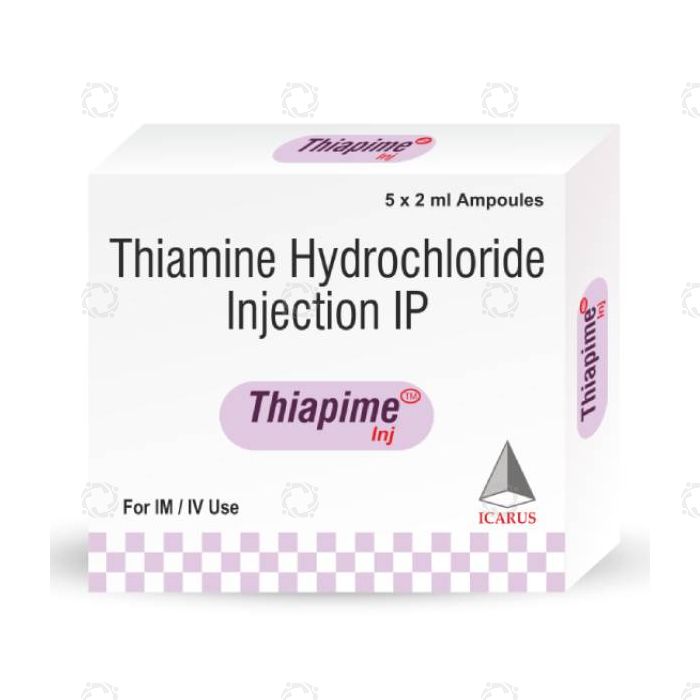
Thiapime Injection - 5×2ml
Prescription Required
Compositions : Thiamine (Vitamin B1) 100mg
₹256.50
(Incl. GST)
MRP :
(Incl. GST)
MRP :
Out of stock
Delivery within 2 to 7 Working Days
Manufacture/Marketer: Icarus Health Care Pvt Ltd
Door Step Delivery
Quick and Secure
No Hidden Charges
Pay only what's shown
18K Pincodes Served
With Trust & Reliability
Description
Thiapime Injection is a pharmaceutical product that contains the active ingredient Thiamine, also known as Vitamin B1. This injection is primarily used for the treatment of thiamine deficiency, which can lead to serious health issues such as Wernicke's encephalopathy and Beriberi. Thiapime Injection is formulated to provide a rapid and effective means of delivering thiamine directly into the bloodstream, ensuring that patients receive the necessary dosage quickly and efficiently. The composition of Thiapime Injection typically includes Thiamine Hydrochloride as the active component, along with suitable excipients that facilitate its administration and absorption. This injectable form is particularly beneficial for patients who may have difficulty absorbing thiamine through oral supplements due to gastrointestinal issues or other medical conditions. The primary therapeutic purpose of Thiapime Injection is to replenish thiamine levels in individuals who are at risk of deficiency, including those with chronic alcoholism, malnutrition, or certain medical conditions that impair nutrient absorption. By restoring adequate thiamine levels, Thiapime Injection helps to support various bodily functions, including energy metabolism and nerve function, thereby promoting overall health and well-being. It is essential for healthcare providers to assess the individual needs of patients before administering Thiapime Injection, ensuring that it is used appropriately and effectively in the management of thiamine deficiency.
Product Details
Uses & Benefits
How Thiapime Injection works
- Thiapime Injection delivers thiamine directly into the bloodstream, bypassing gastrointestinal absorption issues.
- Thiamine plays a crucial role in carbohydrate metabolism, converting glucose into energy.
- It is essential for the synthesis of neurotransmitters, supporting nerve function.
- Thiamine deficiency can lead to neurological and cardiovascular complications; Thiapime Injection helps prevent these issues.
- The rapid action of the injection allows for quick restoration of thiamine levels in the body.
How to use Thiapime Injection
- Administered via intramuscular or intravenous injection by a healthcare professional.
- The typical dosage for adults is 100 mg to 500 mg, depending on the severity of deficiency.
- Frequency of administration may vary; often given daily or as directed by a physician.
- Duration of treatment depends on individual patient needs and response to therapy.
- Always follow the healthcare provider's instructions regarding dosage adjustments.
- Monitor patients for signs of improvement or adverse reactions during treatment.
Lifestyle Advice
- Maintain a balanced diet rich in whole grains, legumes, and nuts to support overall vitamin intake.
- Avoid excessive alcohol consumption, which can lead to nutrient deficiencies.
- Stay hydrated and engage in regular physical activity to promote metabolic health.
- Consult with a healthcare provider before starting any new supplements or medications.
- Keep regular follow-up appointments to monitor health status and nutritional needs.
Safety Advice
Side Effects
- Common side effects may include pain or swelling at the injection site.
- Some individuals may experience allergic reactions, such as rash or itching.
- Serious side effects are rare but can include anaphylaxis; seek immediate medical attention if symptoms occur.
- Monitor for signs of overdose, which may present as headache, irritability, or gastrointestinal disturbances.
- If any unusual symptoms occur after administration, contact a healthcare provider promptly.
Precautions and Warnings
- Contraindicated in patients with known hypersensitivity to thiamine or any excipients in the formulation.
- Caution is advised in patients with renal impairment; dosage adjustments may be necessary.
- Pregnant or breastfeeding women should consult their healthcare provider before use.
- Avoid alcohol consumption during treatment as it can exacerbate deficiency symptoms.
- Patients should be monitored for potential interactions with other medications they are taking.
- Driving or operating heavy machinery should be avoided if experiencing dizziness or other side effects from the injection.
FAQs
1. What is Thiapime Injection used for?
Thiapime Injection is primarily used to treat thiamine deficiency and prevent related conditions such as Wernicke's encephalopathy.
2. How should Thiapime Injection be administered?
Thiapime Injection should be administered by a healthcare professional via intramuscular or intravenous injection.
3. Are there any side effects associated with Thiapime Injection?
Common side effects may include injection site reactions; serious side effects are rare but should be reported to a healthcare provider.
4. Who should avoid using Thiapime Injection?
Individuals with known hypersensitivity to thiamine or any components of the injection should avoid its use.
5. How should Thiapime Injection be stored?
Thiapime Injection should be stored at room temperature, away from light and moisture.
Thiapime Injection is primarily used to treat thiamine deficiency and prevent related conditions such as Wernicke's encephalopathy.
2. How should Thiapime Injection be administered?
Thiapime Injection should be administered by a healthcare professional via intramuscular or intravenous injection.
3. Are there any side effects associated with Thiapime Injection?
Common side effects may include injection site reactions; serious side effects are rare but should be reported to a healthcare provider.
4. Who should avoid using Thiapime Injection?
Individuals with known hypersensitivity to thiamine or any components of the injection should avoid its use.
5. How should Thiapime Injection be stored?
Thiapime Injection should be stored at room temperature, away from light and moisture.
Instructions
No content available for this section.
More Information
| SKU | 413214 |
|---|---|
| Country of Manufacture | India |
| Manufacturer Address | Icarus Health Care Pvt Ltd |
| Return/Buy Back policy | Non-returnable |
| Prescription Required | Yes |
| Seller | Kogland Commerce Pvt Ltd (TN) |
Thiapime Injection is a pharmaceutical product that contains the active ingredient Thiamine, also known as Vitamin B1. This injection is primarily used for the treatment of thiamine deficiency, which can lead to serious health issues such as Wernicke's encephalopathy and Beriberi. Thiapime Injection is formulated to provide a rapid and effective means of delivering thiamine directly into the bloodstream, ensuring that patients receive the necessary dosage quickly and efficiently. The composition of Thiapime Injection typically includes Thiamine Hydrochloride as the active component, along with suitable excipients that facilitate its administration and absorption. This injectable form is particularly beneficial for patients who may have difficulty absorbing thiamine through oral supplements due to gastrointestinal issues or other medical conditions. The primary therapeutic purpose of Thiapime Injection is to replenish thiamine levels in individuals who are at risk of deficiency, including those with chronic alcoholism, malnutrition, or certain medical conditions that impair nutrient absorption. By restoring adequate thiamine levels, Thiapime Injection helps to support various bodily functions, including energy metabolism and nerve function, thereby promoting overall health and well-being. It is essential for healthcare providers to assess the individual needs of patients before administering Thiapime Injection, ensuring that it is used appropriately and effectively in the management of thiamine deficiency.
Uses & Benefits
- Effective treatment for thiamine deficiency.
- Prevention and management of Wernicke's encephalopathy.
- Supportive therapy for patients with Beriberi.
- Rapid absorption and action due to intravenous administration.
- Beneficial for individuals with malabsorption syndromes.
- Helps in the recovery of patients with chronic alcoholism.
- Supports energy metabolism and nerve function.
- Can be used in conjunction with other vitamin therapies.
- Indicated for patients undergoing certain medical treatments that deplete thiamine levels.
- Useful in emergency situations where rapid thiamine replenishment is required.
How Thiapime Injection works
- Thiapime Injection delivers thiamine directly into the bloodstream, bypassing gastrointestinal absorption issues.
- Thiamine plays a crucial role in carbohydrate metabolism, converting glucose into energy.
- It is essential for the synthesis of neurotransmitters, supporting nerve function.
- Thiamine deficiency can lead to neurological and cardiovascular complications; Thiapime Injection helps prevent these issues.
- The rapid action of the injection allows for quick restoration of thiamine levels in the body.
How to use Thiapime Injection
- Administered via intramuscular or intravenous injection by a healthcare professional.
- The typical dosage for adults is 100 mg to 500 mg, depending on the severity of deficiency.
- Frequency of administration may vary; often given daily or as directed by a physician.
- Duration of treatment depends on individual patient needs and response to therapy.
- Always follow the healthcare provider's instructions regarding dosage adjustments.
- Monitor patients for signs of improvement or adverse reactions during treatment.
Lifestyle Advice
- Maintain a balanced diet rich in whole grains, legumes, and nuts to support overall vitamin intake.
- Avoid excessive alcohol consumption, which can lead to nutrient deficiencies.
- Stay hydrated and engage in regular physical activity to promote metabolic health.
- Consult with a healthcare provider before starting any new supplements or medications.
- Keep regular follow-up appointments to monitor health status and nutritional needs.
Side Effects
- Common side effects may include pain or swelling at the injection site.
- Some individuals may experience allergic reactions, such as rash or itching.
- Serious side effects are rare but can include anaphylaxis; seek immediate medical attention if symptoms occur.
- Monitor for signs of overdose, which may present as headache, irritability, or gastrointestinal disturbances.
- If any unusual symptoms occur after administration, contact a healthcare provider promptly.
Precautions and Warnings
- Contraindicated in patients with known hypersensitivity to thiamine or any excipients in the formulation.
- Caution is advised in patients with renal impairment; dosage adjustments may be necessary.
- Pregnant or breastfeeding women should consult their healthcare provider before use.
- Avoid alcohol consumption during treatment as it can exacerbate deficiency symptoms.
- Patients should be monitored for potential interactions with other medications they are taking.
- Driving or operating heavy machinery should be avoided if experiencing dizziness or other side effects from the injection.
1. What is Thiapime Injection used for?
Thiapime Injection is primarily used to treat thiamine deficiency and prevent related conditions such as Wernicke's encephalopathy.
2. How should Thiapime Injection be administered?
Thiapime Injection should be administered by a healthcare professional via intramuscular or intravenous injection.
3. Are there any side effects associated with Thiapime Injection?
Common side effects may include injection site reactions; serious side effects are rare but should be reported to a healthcare provider.
4. Who should avoid using Thiapime Injection?
Individuals with known hypersensitivity to thiamine or any components of the injection should avoid its use.
5. How should Thiapime Injection be stored?
Thiapime Injection should be stored at room temperature, away from light and moisture.
Thiapime Injection is primarily used to treat thiamine deficiency and prevent related conditions such as Wernicke's encephalopathy.
2. How should Thiapime Injection be administered?
Thiapime Injection should be administered by a healthcare professional via intramuscular or intravenous injection.
3. Are there any side effects associated with Thiapime Injection?
Common side effects may include injection site reactions; serious side effects are rare but should be reported to a healthcare provider.
4. Who should avoid using Thiapime Injection?
Individuals with known hypersensitivity to thiamine or any components of the injection should avoid its use.
5. How should Thiapime Injection be stored?
Thiapime Injection should be stored at room temperature, away from light and moisture.
No content available for this section.
| SKU | 413214 |
|---|---|
| Country of Manufacture | India |
| Manufacturer Address | Icarus Health Care Pvt Ltd |
| Return/Buy Back policy | Non-returnable |
| Prescription Required | Yes |
| Seller | Kogland Commerce Pvt Ltd (TN) |
Door Step Delivery
Quick and Secure
No Hidden Charges
Pay only what's shown
18K Pincodes Served
With Trust & Reliability
Customer Reviews
No reviews yet
Be the first to share your thoughts. Honest feedback helps other shoppers and us serve you better.
Write Your Own Review
Only registered users can write reviews. Please Sign in or create an account