



- Indicated for the treatment of idiopathic pulmonary fibrosis (IPF).
- Used in the management of non-small cell lung cancer (NSCLC).
- Helps slow down disease progression in patients with chronic lung conditions.
- May improve overall survival rates in certain cancer patients.
- Reduces symptoms associated with lung fibrosis, such as shortness of breath.
- Can be part of a comprehensive treatment plan for patients with advanced lung diseases.
- Offers a targeted approach to therapy by inhibiting specific pathways involved in fibrosis and tumor growth.
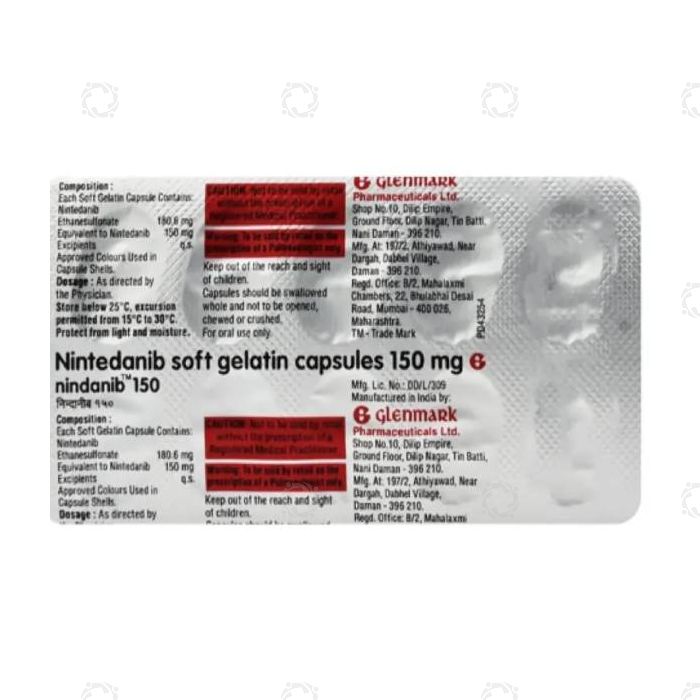
Nindanib 150 mg Capsule - Strip of 10
Prescription Required
Compositions : Nintedanib 150mg
₹995.53
(Incl. GST)
MRP :
(Incl. GST)
MRP :
In stock
Delivery within 2 to 7 Working Days
Manufacture/Marketer: Glenmark Pharmaceuticals Ltd
Door Step Delivery
Quick and Secure
No Hidden Charges
Pay only what's shown
18K Pincodes Served
With Trust & Reliability
Description
Nindanib 150 mg Capsule is a pharmaceutical product that contains the active ingredient Nintedanib, which is classified as a tyrosine kinase inhibitor. This medication is primarily indicated for the treatment of idiopathic pulmonary fibrosis (IPF) and certain types of lung cancer, including non-small cell lung cancer (NSCLC). Nindanib works by inhibiting multiple receptor tyrosine kinases involved in the processes of fibrosis and tumor growth, thereby slowing disease progression and improving patient outcomes. The formulation of Nindanib 150 mg Capsule is designed for oral administration, allowing for convenient dosing. Each capsule contains 150 mg of Nintedanib, along with excipients that aid in the stability and absorption of the active ingredient. The therapeutic purpose of Nindanib 150 mg Capsule extends beyond just symptom management; it aims to address the underlying mechanisms of disease, making it a crucial component in the treatment regimen for patients suffering from chronic lung conditions and specific malignancies. As a targeted therapy, Nindanib represents a significant advancement in the management of these serious health issues, providing hope for improved quality of life and extended survival rates for affected individuals. Patients prescribed Nindanib 150 mg Capsule should be closely monitored by healthcare professionals to ensure optimal therapeutic outcomes and to manage any potential side effects associated with its use.
Product Details
Uses & Benefits
How Nindanib 150 mg Capsule works
- Nindanib inhibits multiple receptor tyrosine kinases that play a role in fibrosis and cancer progression.
- It blocks the activity of vascular endothelial growth factor (VEGF) receptors, which are involved in angiogenesis.
- The drug also targets fibroblast growth factor (FGF) receptors, reducing fibroblast proliferation.
- By inhibiting these pathways, Nindanib helps to decrease inflammation and fibrosis in lung tissue.
- This action contributes to improved lung function and reduced symptoms in patients with IPF.
- In cancer treatment, it disrupts tumor growth and metastasis by targeting key signaling pathways.
How to use Nindanib 150 mg Capsule
- Take Nindanib 150 mg Capsule orally, with or without food.
- The usual recommended dosage is one capsule taken twice daily.
- Maintain consistent timing for each dose to ensure stable blood levels of the medication.
- Swallow the capsule whole; do not crush or chew it.
- Continue taking the medication as prescribed by your healthcare provider, even if you feel well.
- The duration of treatment will depend on your specific condition and response to therapy.
- If you miss a dose, take it as soon as you remember unless it's almost time for your next dose; do not double up.
Lifestyle Advice
- Maintain a balanced diet rich in fruits, vegetables, and whole grains to support overall health.
- Stay hydrated by drinking plenty of water throughout the day.
- Avoid smoking and exposure to secondhand smoke to protect lung health.
- Engage in regular physical activity as tolerated, focusing on exercises that improve lung function.
- Monitor your symptoms and report any changes to your healthcare provider promptly.
- Consider joining a support group for individuals with similar health conditions for emotional support.
Safety Advice
Side Effects
- Common side effects include:
- Diarrhea
- Nausea
- Vomiting
- Fatigue
- Serious side effects may include:
- Liver problems (indicated by jaundice or dark urine)
- Severe gastrointestinal bleeding
- Heart problems (chest pain or irregular heartbeat)
- If you experience any severe side effects, seek medical attention immediately.
Precautions and Warnings
- Nindanib is contraindicated in patients with known hypersensitivity to Nintedanib or any component of the formulation.
- Caution is advised for individuals with liver impairment; dosage adjustments may be necessary.
- Pregnant or breastfeeding women should avoid using Nindanib due to potential risks to the fetus or infant.
- Avoid alcohol consumption while taking this medication as it may exacerbate side effects.
- Patients should be monitored for signs of liver dysfunction during treatment.
- Driving or operating heavy machinery should be approached with caution until you know how Nindanib affects you.
FAQs
1. Is Nindanib 150 mg Capsule safe for everyone?
Nindanib 150 mg Capsule may not be suitable for individuals with certain medical conditions or those who are pregnant or breastfeeding. Always consult your healthcare provider.
2. What should I do if I miss a dose of Nindanib?
If you miss a dose of Nindanib 150 mg Capsule, take it as soon as you remember unless it's close to your next scheduled dose. Do not take two doses at once.
3. Can I take other medications while using Nindanib?
Nindanib may interact with other medications. Inform your healthcare provider about all medications you are taking to avoid potential interactions.
4. How should I store Nindanib 150 mg Capsule?
Store Nindanib 150 mg Capsule at room temperature, away from moisture and heat. Keep it out of reach of children.
5. What are the common side effects of Nindanib?
Common side effects may include diarrhea, nausea, vomiting, and fatigue. Contact your doctor if you experience severe side effects.
6. Can I drink alcohol while taking Nindanib?
It's advisable to limit alcohol consumption while taking Nindanib due to potential interactions and increased risk of side effects.
7. How long will I need to take Nindanib?
The duration of treatment with Nindanib 150 mg Capsule will depend on your specific condition and response to therapy; follow your doctor's recommendations.
Instructions
Directions for Use
Use only as prescribed by your physician.
Storage and Disposal
Please refer to the product label for storage information.
More Information
| SKU | 876996 |
|---|---|
| Country of Manufacture | India |
| Manufacturer Address | Glenmark Pharmaceuticals Ltd |
| Return/Buy Back policy | Non-returnable |
| Prescription Required | Yes |
| Storage | Please refer to the product label for storage information. |
| Seller | Kogland Commerce Pvt Ltd (TN) |
Nindanib 150 mg Capsule is a pharmaceutical product that contains the active ingredient Nintedanib, which is classified as a tyrosine kinase inhibitor. This medication is primarily indicated for the treatment of idiopathic pulmonary fibrosis (IPF) and certain types of lung cancer, including non-small cell lung cancer (NSCLC). Nindanib works by inhibiting multiple receptor tyrosine kinases involved in the processes of fibrosis and tumor growth, thereby slowing disease progression and improving patient outcomes. The formulation of Nindanib 150 mg Capsule is designed for oral administration, allowing for convenient dosing. Each capsule contains 150 mg of Nintedanib, along with excipients that aid in the stability and absorption of the active ingredient. The therapeutic purpose of Nindanib 150 mg Capsule extends beyond just symptom management; it aims to address the underlying mechanisms of disease, making it a crucial component in the treatment regimen for patients suffering from chronic lung conditions and specific malignancies. As a targeted therapy, Nindanib represents a significant advancement in the management of these serious health issues, providing hope for improved quality of life and extended survival rates for affected individuals. Patients prescribed Nindanib 150 mg Capsule should be closely monitored by healthcare professionals to ensure optimal therapeutic outcomes and to manage any potential side effects associated with its use.
Uses & Benefits
- Indicated for the treatment of idiopathic pulmonary fibrosis (IPF).
- Used in the management of non-small cell lung cancer (NSCLC).
- Helps slow down disease progression in patients with chronic lung conditions.
- May improve overall survival rates in certain cancer patients.
- Reduces symptoms associated with lung fibrosis, such as shortness of breath.
- Can be part of a comprehensive treatment plan for patients with advanced lung diseases.
- Offers a targeted approach to therapy by inhibiting specific pathways involved in fibrosis and tumor growth.
How Nindanib 150 mg Capsule works
- Nindanib inhibits multiple receptor tyrosine kinases that play a role in fibrosis and cancer progression.
- It blocks the activity of vascular endothelial growth factor (VEGF) receptors, which are involved in angiogenesis.
- The drug also targets fibroblast growth factor (FGF) receptors, reducing fibroblast proliferation.
- By inhibiting these pathways, Nindanib helps to decrease inflammation and fibrosis in lung tissue.
- This action contributes to improved lung function and reduced symptoms in patients with IPF.
- In cancer treatment, it disrupts tumor growth and metastasis by targeting key signaling pathways.
How to use Nindanib 150 mg Capsule
- Take Nindanib 150 mg Capsule orally, with or without food.
- The usual recommended dosage is one capsule taken twice daily.
- Maintain consistent timing for each dose to ensure stable blood levels of the medication.
- Swallow the capsule whole; do not crush or chew it.
- Continue taking the medication as prescribed by your healthcare provider, even if you feel well.
- The duration of treatment will depend on your specific condition and response to therapy.
- If you miss a dose, take it as soon as you remember unless it's almost time for your next dose; do not double up.
Lifestyle Advice
- Maintain a balanced diet rich in fruits, vegetables, and whole grains to support overall health.
- Stay hydrated by drinking plenty of water throughout the day.
- Avoid smoking and exposure to secondhand smoke to protect lung health.
- Engage in regular physical activity as tolerated, focusing on exercises that improve lung function.
- Monitor your symptoms and report any changes to your healthcare provider promptly.
- Consider joining a support group for individuals with similar health conditions for emotional support.
Side Effects
- Common side effects include:
- Diarrhea
- Nausea
- Vomiting
- Fatigue
- Serious side effects may include:
- Liver problems (indicated by jaundice or dark urine)
- Severe gastrointestinal bleeding
- Heart problems (chest pain or irregular heartbeat)
- If you experience any severe side effects, seek medical attention immediately.
Precautions and Warnings
- Nindanib is contraindicated in patients with known hypersensitivity to Nintedanib or any component of the formulation.
- Caution is advised for individuals with liver impairment; dosage adjustments may be necessary.
- Pregnant or breastfeeding women should avoid using Nindanib due to potential risks to the fetus or infant.
- Avoid alcohol consumption while taking this medication as it may exacerbate side effects.
- Patients should be monitored for signs of liver dysfunction during treatment.
- Driving or operating heavy machinery should be approached with caution until you know how Nindanib affects you.
1. Is Nindanib 150 mg Capsule safe for everyone?
Nindanib 150 mg Capsule may not be suitable for individuals with certain medical conditions or those who are pregnant or breastfeeding. Always consult your healthcare provider.
2. What should I do if I miss a dose of Nindanib?
If you miss a dose of Nindanib 150 mg Capsule, take it as soon as you remember unless it's close to your next scheduled dose. Do not take two doses at once.
3. Can I take other medications while using Nindanib?
Nindanib may interact with other medications. Inform your healthcare provider about all medications you are taking to avoid potential interactions.
4. How should I store Nindanib 150 mg Capsule?
Store Nindanib 150 mg Capsule at room temperature, away from moisture and heat. Keep it out of reach of children.
5. What are the common side effects of Nindanib?
Common side effects may include diarrhea, nausea, vomiting, and fatigue. Contact your doctor if you experience severe side effects.
6. Can I drink alcohol while taking Nindanib?
It's advisable to limit alcohol consumption while taking Nindanib due to potential interactions and increased risk of side effects.
7. How long will I need to take Nindanib?
The duration of treatment with Nindanib 150 mg Capsule will depend on your specific condition and response to therapy; follow your doctor's recommendations.
Nindanib 150 mg Capsule may not be suitable for individuals with certain medical conditions or those who are pregnant or breastfeeding. Always consult your healthcare provider.
2. What should I do if I miss a dose of Nindanib?
If you miss a dose of Nindanib 150 mg Capsule, take it as soon as you remember unless it's close to your next scheduled dose. Do not take two doses at once.
3. Can I take other medications while using Nindanib?
Nindanib may interact with other medications. Inform your healthcare provider about all medications you are taking to avoid potential interactions.
4. How should I store Nindanib 150 mg Capsule?
Store Nindanib 150 mg Capsule at room temperature, away from moisture and heat. Keep it out of reach of children.
5. What are the common side effects of Nindanib?
Common side effects may include diarrhea, nausea, vomiting, and fatigue. Contact your doctor if you experience severe side effects.
6. Can I drink alcohol while taking Nindanib?
It's advisable to limit alcohol consumption while taking Nindanib due to potential interactions and increased risk of side effects.
7. How long will I need to take Nindanib?
The duration of treatment with Nindanib 150 mg Capsule will depend on your specific condition and response to therapy; follow your doctor's recommendations.
Directions for Use
Use only as prescribed by your physician.
Storage and Disposal
Please refer to the product label for storage information.
| SKU | 876996 |
|---|---|
| Country of Manufacture | India |
| Manufacturer Address | Glenmark Pharmaceuticals Ltd |
| Return/Buy Back policy | Non-returnable |
| Prescription Required | Yes |
| Storage | Please refer to the product label for storage information. |
| Seller | Kogland Commerce Pvt Ltd (TN) |
Door Step Delivery
Quick and Secure
No Hidden Charges
Pay only what's shown
18K Pincodes Served
With Trust & Reliability
Customer Reviews
No reviews yet
Be the first to share your thoughts. Honest feedback helps other shoppers and us serve you better.
Write Your Own Review
Only registered users can write reviews. Please Sign in or create an account