


- Monocef SB 1 g Injection effectively treats severe bacterial infections.
- This formulation is particularly beneficial for patients with infections caused by resistant bacteria.
- Monocef SB 1 g Injection is used in hospital settings for serious infections.
- The combination of Cefoperazone and Sulbactam enhances the effectiveness of treatment.
- Monocef SB 1 g Injection is indicated for respiratory tract infections.
- This injection is effective against urinary tract infections caused by susceptible organisms.
- Monocef SB 1 g Injection can be used to treat skin and soft tissue infections.
- It is also indicated for intra-abdominal infections.
- Monocef SB 1 g Injection supports the management of sepsis and febrile neutropenia.
- This medication is crucial for treating infections in immunocompromised patients.
- Monocef SB 1 g Injection provides rapid action due to its intravenous administration.
- The formulation helps reduce the duration of hospitalization for patients with severe infections.
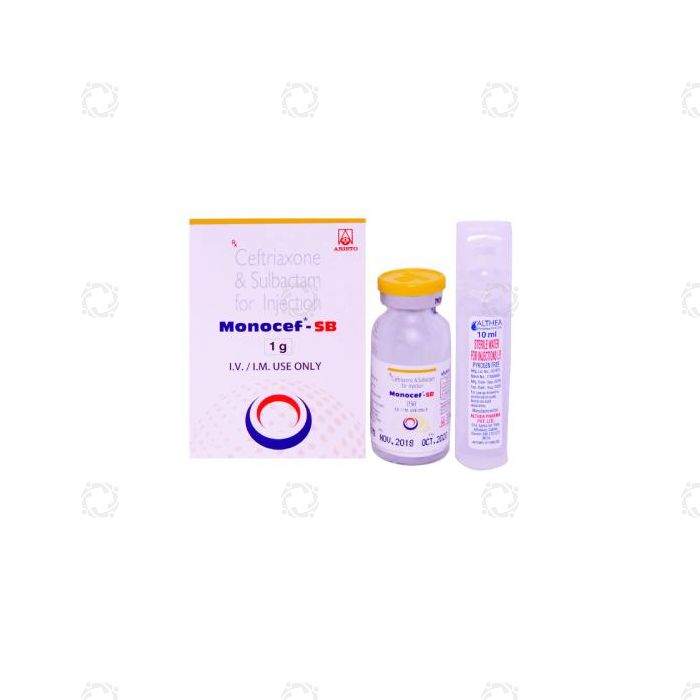
Monocef SB 1 g Injection
Prescription Required
Compositions : Ceftriaxone 1000mg + Sulbactam 500mg
₹174.89
(Incl. GST)
MRP :
(Incl. GST)
MRP :
Out of stock
Delivery within 2 to 7 Working Days
Manufacture/Marketer: Aristo Pharmaceuticals Pvt Ltd
Recommended Substitute
Door Step Delivery
Quick and Secure
No Hidden Charges
Pay only what's shown
18K Pincodes Served
With Trust & Reliability
Description
Monocef SB 1 g Injection is a potent pharmaceutical formulation designed to combat a variety of bacterial infections. This injection contains a unique combination of active ingredients that work synergistically to provide effective treatment against susceptible pathogens. The primary components of Monocef SB 1 g Injection include Cefoperazone and Sulbactam, which belong to the class of beta-lactam antibiotics. Cefoperazone is a broad-spectrum cephalosporin antibiotic, while Sulbactam acts as a beta-lactamase inhibitor, enhancing the efficacy of Cefoperazone by preventing the breakdown of the antibiotic by bacterial enzymes. The therapeutic category of Monocef SB 1 g Injection primarily focuses on treating serious infections caused by gram-positive and gram-negative bacteria, including those resistant to other antibiotics. This makes Monocef SB 1 g Injection an essential option in the management of severe infections, particularly in hospital settings where antibiotic resistance is a growing concern. The formulation is administered via injection, ensuring rapid absorption and immediate action against infections. By utilizing Monocef SB 1 g Injection, healthcare providers can effectively address complex infections, thereby improving patient outcomes and reducing the risk of complications associated with untreated bacterial infections. The combination of Cefoperazone and Sulbactam in Monocef SB 1 g Injection not only targets a wide range of bacteria but also minimizes the potential for resistance development, making it a reliable choice for clinicians. Overall, Monocef SB 1 g Injection stands out as a critical therapeutic agent in modern medicine, providing robust antimicrobial activity and supporting effective infection management.
Product Details
Uses & Benefits
How to use Monocef SB 1 g Injection
- Monocef SB 1 g Injection should be administered intravenously by a healthcare professional.
- The recommended dosage for adults typically ranges from 1 to 2 grams every 8 to 12 hours, depending on the severity of the infection.
- For pediatric patients, the dosage is usually calculated based on body weight.
- Monocef SB 1 g Injection should be infused slowly over a period of 30 minutes to ensure proper absorption.
- The frequency of administration may vary based on clinical response and laboratory results.
- Duration of treatment with Monocef SB 1 g Injection generally lasts from 5 to 14 days, depending on the infection type.
- Special instructions include monitoring renal function during prolonged therapy with Monocef SB 1 g Injection.
- Healthcare providers should adjust dosages in patients with renal impairment as necessary.
Lifestyle Advice
- Maintain hydration while receiving Monocef SB 1 g Injection to support kidney function.
- Avoid consuming alcohol during treatment to prevent adverse reactions.
- Incorporate a balanced diet rich in vitamins and minerals to support overall health during antibiotic therapy.
- Regularly monitor any changes in health status and report them to your healthcare provider promptly.
- Engage in light physical activity as tolerated to promote recovery while using Monocef SB 1 g Injection.
Safety Advice
Side Effects
- Common side effects of Monocef SB 1 g Injection include nausea and vomiting.
- Patients may experience diarrhea as a result of antibiotic therapy with Monocef SB 1 g Injection.
- Allergic reactions such as rash or itching may occur in some individuals.
- Serious side effects can include anaphylaxis; immediate medical attention is required if this occurs.
- Hematological reactions like thrombocytopenia or leukopenia may be observed with Monocef SB 1 g Injection.
- Patients should be monitored for signs of superinfection during treatment with Monocef SB 1 g Injection.
- Liver function tests may show elevated liver enzymes in some cases.
- If any severe side effects occur, discontinue use and consult a healthcare provider immediately.
Precautions and Warnings
- Monocef SB 1 g Injection should not be used in patients with known hypersensitivity to cephalosporins or penicillins.
- Caution is advised when administering Monocef SB 1 g Injection to patients with a history of gastrointestinal disease, particularly colitis.
- Pregnant or breastfeeding women should consult their healthcare provider before using Monocef SB 1 g Injection.
- Alcohol consumption should be avoided during treatment with Monocef SB 1 g Injection due to potential interactions.
- Patients with renal impairment may require dosage adjustments when using Monocef SB 1 g Injection.
- Driving or operating heavy machinery should be avoided if experiencing dizziness or other side effects from Monocef SB 1 g Injection.
- Consult a doctor if symptoms do not improve within a few days of starting treatment with Monocef SB 1 g Injection.
FAQs
1. What is Monocef SB 1 g Injection used for?
Monocef SB 1 g Injection is primarily used to treat severe bacterial infections caused by susceptible organisms, including respiratory, urinary tract, and skin infections.
2. How should I administer Monocef SB 1 g Injection?
Monocef SB 1 g Injection should be administered intravenously by a healthcare professional, typically infused slowly over a period of about 30 minutes.
3. What are the common side effects of Monocef SB 1 g Injection?
Common side effects include nausea, vomiting, diarrhea, and allergic reactions such as rash or itching.
4. Can I use Monocef SB 1 g Injection if I am pregnant?
Pregnant women should consult their healthcare provider before using Monocef SB 1 g Injection to ensure safety for both mother and baby.
5. What precautions should I take while using Monocef SB 1 g Injection?
Avoid alcohol consumption, monitor for allergic reactions, and consult your doctor if you have a history of gastrointestinal issues before using Monocef SB 1 g Injection.
6. How long is the typical treatment duration with Monocef SB 1 g Injection?
The duration of treatment with Monocef SB 1 g Injection usually ranges from 5 to 14 days, depending on the type and severity of the infection.
7. What should I do if I miss a dose of Monocef SB 1 g Injection?
If you miss a dose of Monocef SB 1 g Injection, contact your healthcare provider for guidance on how to proceed.
Monocef SB 1 g Injection is primarily used to treat severe bacterial infections caused by susceptible organisms, including respiratory, urinary tract, and skin infections.
2. How should I administer Monocef SB 1 g Injection?
Monocef SB 1 g Injection should be administered intravenously by a healthcare professional, typically infused slowly over a period of about 30 minutes.
3. What are the common side effects of Monocef SB 1 g Injection?
Common side effects include nausea, vomiting, diarrhea, and allergic reactions such as rash or itching.
4. Can I use Monocef SB 1 g Injection if I am pregnant?
Pregnant women should consult their healthcare provider before using Monocef SB 1 g Injection to ensure safety for both mother and baby.
5. What precautions should I take while using Monocef SB 1 g Injection?
Avoid alcohol consumption, monitor for allergic reactions, and consult your doctor if you have a history of gastrointestinal issues before using Monocef SB 1 g Injection.
6. How long is the typical treatment duration with Monocef SB 1 g Injection?
The duration of treatment with Monocef SB 1 g Injection usually ranges from 5 to 14 days, depending on the type and severity of the infection.
7. What should I do if I miss a dose of Monocef SB 1 g Injection?
If you miss a dose of Monocef SB 1 g Injection, contact your healthcare provider for guidance on how to proceed.
Instructions
Directions for Use
Use only as prescribed by your physician.
Storage and Disposal
Please refer to the product label for storage information.
More Information
| SKU | 105074 |
|---|---|
| Country of Manufacture | India |
| Manufacturer Address | Aristo Pharmaceuticals Pvt Ltd |
| Return/Buy Back policy | Non-returnable |
| Prescription Required | Yes |
| Storage | Please refer to the product label for storage information. |
| Seller | Kogland Commerce Pvt Ltd (TN) |
Monocef SB 1 g Injection is a potent pharmaceutical formulation designed to combat a variety of bacterial infections. This injection contains a unique combination of active ingredients that work synergistically to provide effective treatment against susceptible pathogens. The primary components of Monocef SB 1 g Injection include Cefoperazone and Sulbactam, which belong to the class of beta-lactam antibiotics. Cefoperazone is a broad-spectrum cephalosporin antibiotic, while Sulbactam acts as a beta-lactamase inhibitor, enhancing the efficacy of Cefoperazone by preventing the breakdown of the antibiotic by bacterial enzymes. The therapeutic category of Monocef SB 1 g Injection primarily focuses on treating serious infections caused by gram-positive and gram-negative bacteria, including those resistant to other antibiotics. This makes Monocef SB 1 g Injection an essential option in the management of severe infections, particularly in hospital settings where antibiotic resistance is a growing concern. The formulation is administered via injection, ensuring rapid absorption and immediate action against infections. By utilizing Monocef SB 1 g Injection, healthcare providers can effectively address complex infections, thereby improving patient outcomes and reducing the risk of complications associated with untreated bacterial infections. The combination of Cefoperazone and Sulbactam in Monocef SB 1 g Injection not only targets a wide range of bacteria but also minimizes the potential for resistance development, making it a reliable choice for clinicians. Overall, Monocef SB 1 g Injection stands out as a critical therapeutic agent in modern medicine, providing robust antimicrobial activity and supporting effective infection management.
Uses & Benefits
- Monocef SB 1 g Injection effectively treats severe bacterial infections.
- This formulation is particularly beneficial for patients with infections caused by resistant bacteria.
- Monocef SB 1 g Injection is used in hospital settings for serious infections.
- The combination of Cefoperazone and Sulbactam enhances the effectiveness of treatment.
- Monocef SB 1 g Injection is indicated for respiratory tract infections.
- This injection is effective against urinary tract infections caused by susceptible organisms.
- Monocef SB 1 g Injection can be used to treat skin and soft tissue infections.
- It is also indicated for intra-abdominal infections.
- Monocef SB 1 g Injection supports the management of sepsis and febrile neutropenia.
- This medication is crucial for treating infections in immunocompromised patients.
- Monocef SB 1 g Injection provides rapid action due to its intravenous administration.
- The formulation helps reduce the duration of hospitalization for patients with severe infections.
How to use Monocef SB 1 g Injection
- Monocef SB 1 g Injection should be administered intravenously by a healthcare professional.
- The recommended dosage for adults typically ranges from 1 to 2 grams every 8 to 12 hours, depending on the severity of the infection.
- For pediatric patients, the dosage is usually calculated based on body weight.
- Monocef SB 1 g Injection should be infused slowly over a period of 30 minutes to ensure proper absorption.
- The frequency of administration may vary based on clinical response and laboratory results.
- Duration of treatment with Monocef SB 1 g Injection generally lasts from 5 to 14 days, depending on the infection type.
- Special instructions include monitoring renal function during prolonged therapy with Monocef SB 1 g Injection.
- Healthcare providers should adjust dosages in patients with renal impairment as necessary.
Lifestyle Advice
- Maintain hydration while receiving Monocef SB 1 g Injection to support kidney function.
- Avoid consuming alcohol during treatment to prevent adverse reactions.
- Incorporate a balanced diet rich in vitamins and minerals to support overall health during antibiotic therapy.
- Regularly monitor any changes in health status and report them to your healthcare provider promptly.
- Engage in light physical activity as tolerated to promote recovery while using Monocef SB 1 g Injection.
Side Effects
- Common side effects of Monocef SB 1 g Injection include nausea and vomiting.
- Patients may experience diarrhea as a result of antibiotic therapy with Monocef SB 1 g Injection.
- Allergic reactions such as rash or itching may occur in some individuals.
- Serious side effects can include anaphylaxis; immediate medical attention is required if this occurs.
- Hematological reactions like thrombocytopenia or leukopenia may be observed with Monocef SB 1 g Injection.
- Patients should be monitored for signs of superinfection during treatment with Monocef SB 1 g Injection.
- Liver function tests may show elevated liver enzymes in some cases.
- If any severe side effects occur, discontinue use and consult a healthcare provider immediately.
Precautions and Warnings
- Monocef SB 1 g Injection should not be used in patients with known hypersensitivity to cephalosporins or penicillins.
- Caution is advised when administering Monocef SB 1 g Injection to patients with a history of gastrointestinal disease, particularly colitis.
- Pregnant or breastfeeding women should consult their healthcare provider before using Monocef SB 1 g Injection.
- Alcohol consumption should be avoided during treatment with Monocef SB 1 g Injection due to potential interactions.
- Patients with renal impairment may require dosage adjustments when using Monocef SB 1 g Injection.
- Driving or operating heavy machinery should be avoided if experiencing dizziness or other side effects from Monocef SB 1 g Injection.
- Consult a doctor if symptoms do not improve within a few days of starting treatment with Monocef SB 1 g Injection.
1. What is Monocef SB 1 g Injection used for?
Monocef SB 1 g Injection is primarily used to treat severe bacterial infections caused by susceptible organisms, including respiratory, urinary tract, and skin infections.
2. How should I administer Monocef SB 1 g Injection?
Monocef SB 1 g Injection should be administered intravenously by a healthcare professional, typically infused slowly over a period of about 30 minutes.
3. What are the common side effects of Monocef SB 1 g Injection?
Common side effects include nausea, vomiting, diarrhea, and allergic reactions such as rash or itching.
4. Can I use Monocef SB 1 g Injection if I am pregnant?
Pregnant women should consult their healthcare provider before using Monocef SB 1 g Injection to ensure safety for both mother and baby.
5. What precautions should I take while using Monocef SB 1 g Injection?
Avoid alcohol consumption, monitor for allergic reactions, and consult your doctor if you have a history of gastrointestinal issues before using Monocef SB 1 g Injection.
6. How long is the typical treatment duration with Monocef SB 1 g Injection?
The duration of treatment with Monocef SB 1 g Injection usually ranges from 5 to 14 days, depending on the type and severity of the infection.
7. What should I do if I miss a dose of Monocef SB 1 g Injection?
If you miss a dose of Monocef SB 1 g Injection, contact your healthcare provider for guidance on how to proceed.
Monocef SB 1 g Injection is primarily used to treat severe bacterial infections caused by susceptible organisms, including respiratory, urinary tract, and skin infections.
2. How should I administer Monocef SB 1 g Injection?
Monocef SB 1 g Injection should be administered intravenously by a healthcare professional, typically infused slowly over a period of about 30 minutes.
3. What are the common side effects of Monocef SB 1 g Injection?
Common side effects include nausea, vomiting, diarrhea, and allergic reactions such as rash or itching.
4. Can I use Monocef SB 1 g Injection if I am pregnant?
Pregnant women should consult their healthcare provider before using Monocef SB 1 g Injection to ensure safety for both mother and baby.
5. What precautions should I take while using Monocef SB 1 g Injection?
Avoid alcohol consumption, monitor for allergic reactions, and consult your doctor if you have a history of gastrointestinal issues before using Monocef SB 1 g Injection.
6. How long is the typical treatment duration with Monocef SB 1 g Injection?
The duration of treatment with Monocef SB 1 g Injection usually ranges from 5 to 14 days, depending on the type and severity of the infection.
7. What should I do if I miss a dose of Monocef SB 1 g Injection?
If you miss a dose of Monocef SB 1 g Injection, contact your healthcare provider for guidance on how to proceed.
Directions for Use
Use only as prescribed by your physician.
Storage and Disposal
Please refer to the product label for storage information.
| SKU | 105074 |
|---|---|
| Country of Manufacture | India |
| Manufacturer Address | Aristo Pharmaceuticals Pvt Ltd |
| Return/Buy Back policy | Non-returnable |
| Prescription Required | Yes |
| Storage | Please refer to the product label for storage information. |
| Seller | Kogland Commerce Pvt Ltd (TN) |
Door Step Delivery
Quick and Secure
No Hidden Charges
Pay only what's shown
18K Pincodes Served
With Trust & Reliability
Customer Reviews
No reviews yet
Be the first to share your thoughts. Honest feedback helps other shoppers and us serve you better.
Write Your Own Review
Only registered users can write reviews. Please Sign in or create an account