


- Monocef 1 g Injection effectively treats severe bacterial infections.
- This formulation is particularly beneficial for patients with pneumonia.
- Monocef 1 g Injection is used to manage urinary tract infections.
- Skin infections can be effectively treated with Monocef 1 g Injection.
- Monocef 1 g Injection helps in preventing complications from bacterial infections.
- This medication is suitable for surgical prophylaxis in high-risk patients.
- Monocef 1 g Injection supports quick recovery from acute bacterial infections.
- Patients with sepsis may benefit from the use of Monocef 1 g Injection.
- Monocef 1 g Injection is effective against both gram-positive and gram-negative bacteria.
- This therapy is often used in combination with other antibiotics for enhanced efficacy.
- Monocef 1 g Injection is indicated for treating meningitis caused by susceptible organisms.
- Healthcare providers recommend Monocef 1 g Injection for its broad-spectrum activity.
- Monocef 1 g Injection is essential in treating infections in immunocompromised patients.
- This formulation aids in reducing the duration of hospital stays due to infections.
- Monocef 1 g Injection can be used in pediatric patients under medical supervision.
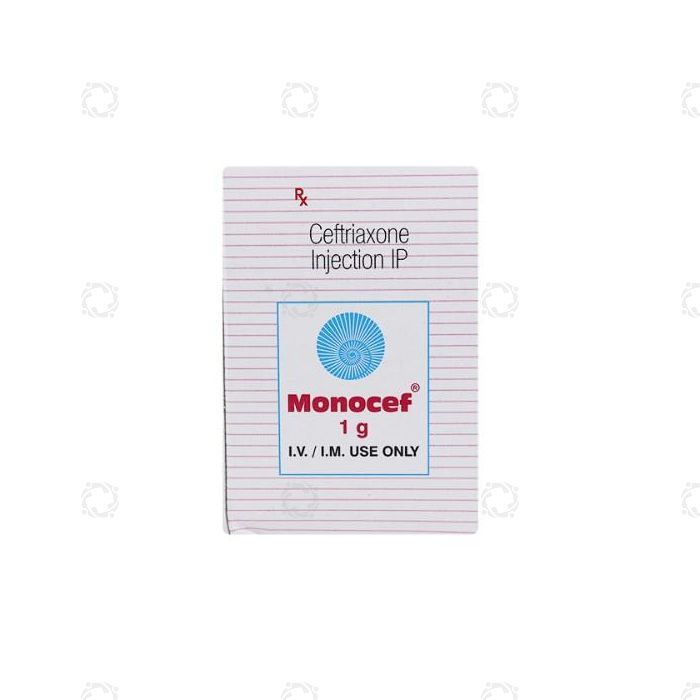
Monocef 1 g Injection
Prescription Required
Compositions : Ceftriaxone 1g
₹46.93
(Incl. GST)
MRP :
(Incl. GST)
MRP :
In stock
Delivery within 2 to 7 Working Days
Manufacture/Marketer: Aristo Pharmaceuticals Pvt Ltd
Door Step Delivery
Quick and Secure
No Hidden Charges
Pay only what's shown
18K Pincodes Served
With Trust & Reliability
Description
Monocef 1 g Injection is a potent antibiotic formulation designed to combat a variety of bacterial infections. This medication falls under the category of cephalosporins, which are known for their effectiveness against a broad spectrum of gram-positive and gram-negative bacteria. The key composition of Monocef 1 g Injection includes ceftriaxone, a third-generation cephalosporin that works by inhibiting bacterial cell wall synthesis, leading to cell lysis and death. The primary purpose of Monocef 1 g Injection is to treat infections such as pneumonia, urinary tract infections, and skin infections, among others. By targeting the underlying causes of these infections, Monocef 1 g Injection plays a crucial role in therapeutic interventions, ensuring patients receive effective treatment for their conditions. The formulation is administered via injection, allowing for rapid absorption and immediate therapeutic action. Healthcare professionals often recommend Monocef 1 g Injection for its reliability and efficacy in managing serious infections, making it a staple in both hospital and outpatient settings. With its broad therapeutic category, Monocef 1 g Injection is essential for treating various bacterial infections, providing healthcare providers with a powerful tool in their antibiotic arsenal. The composition of Monocef 1 g Injection not only ensures effective treatment but also minimizes the risk of resistance development, making it a preferred choice among clinicians. Overall, Monocef 1 g Injection stands out as a vital medication in the fight against bacterial infections, supporting patient recovery and health.
Product Details
Uses & Benefits
How Monocef 1 g Injection works
- Monocef 1 g Injection works by disrupting the synthesis of bacterial cell walls, leading to cell death. This mechanism makes it effective against a wide range of bacteria.
- The active ingredient, ceftriaxone, binds to penicillin-binding proteins (PBPs) on the bacterial cell wall.
- By inhibiting PBPs, Monocef 1 g Injection prevents cross-linking of peptidoglycan layers.
- This disruption weakens the cell wall structure, causing lysis and death of the bacteria.
- Monocef 1 g Injection exhibits time-dependent killing properties, making prolonged exposure critical for efficacy.
- The formulation has excellent tissue penetration, allowing it to reach infection sites effectively.
- Monocef 1 g Injection is resistant to many beta-lactamases produced by bacteria.
- This resistance enhances its effectiveness against resistant strains of bacteria.
How to use Monocef 1 g Injection
- Monocef 1 g Injection should be administered intravenously or intramuscularly as directed by a healthcare professional.
- The recommended dosage for adults typically ranges from 1 to 2 grams daily, depending on the severity of the infection.
- For pediatric patients, dosing is usually based on body weight and should be determined by a physician.
- Monocef 1 g Injection is often given once daily or divided into two doses based on clinical judgment.
- The duration of treatment with Monocef 1 g Injection generally lasts from 5 to 14 days, depending on the infection type.
- Special instructions include monitoring renal function during prolonged therapy with Monocef 1 g Injection.
- Ensure proper hydration during treatment to support kidney function while using Monocef 1 g Injection.
Lifestyle Advice
- Maintain a balanced diet rich in vitamins and minerals to support recovery while using Monocef 1 g Injection.
- Avoid excessive alcohol intake during treatment with Monocef 1 g Injection to prevent adverse effects.
- Stay hydrated by drinking plenty of fluids while receiving Monocef 1 g Injection to aid kidney function.
- Engage in light physical activity as tolerated to promote overall health during treatment with Monocef 1 g Injection.
- Follow your healthcare provider's instructions regarding medication adherence while using Monocef 1 g Injection.
Safety Advice
Side Effects
- Common side effects of Monocef 1 g Injection may include nausea and vomiting.
- Some patients may experience diarrhea while receiving Monocef 1 g Injection.
- Allergic reactions such as rash or itching can occur with Monocef 1 g Injection.
- Serious side effects may include anaphylaxis; seek immediate medical attention if this occurs.
- Hematological reactions like thrombocytopenia may arise during treatment with Monocef 1 g Injection.
- Liver enzyme elevations have been reported in some patients using Monocef 1 g Injection.
- Monitor for signs of superinfection during prolonged use of Monocef 1 g Injection.
Precautions and Warnings
- Monocef 1 g Injection should not be used in patients with known hypersensitivity to cephalosporins.
- Caution is advised when administering Monocef 1 g Injection to patients with renal impairment.
- Pregnant or breastfeeding women should consult their healthcare provider before using Monocef 1 g Injection.
- Avoid alcohol consumption while receiving treatment with Monocef 1 g Injection due to potential interactions.
- Patients should inform their doctor about any other medications they are taking before starting Monocef 1 g Injection.
- Regular monitoring of blood counts is recommended during prolonged therapy with Monocef 1 g Injection.
FAQs
1. What is Monocef 1 g Injection used for?
Monocef 1 g Injection is primarily used to treat various bacterial infections such as pneumonia, urinary tract infections, and skin infections.
2. How should I administer Monocef 1 g Injection?
Monocef 1 g Injection should be administered intravenously or intramuscularly as directed by your healthcare provider.
3. What are the common side effects of Monocef 1 g Injection?
Common side effects include nausea, vomiting, and diarrhea. Allergic reactions may also occur.
4. Can I use Monocef 1 g Injection if I am pregnant?
Consult your healthcare provider before using Monocef 1 g Injection if you are pregnant or breastfeeding.
5. Are there any drug interactions with Monocef 1 g Injection?
Yes, inform your doctor about all medications you are taking to avoid potential interactions with Monocef 1 g Injection.
6. How long should I take Monocef 1 g Injection?
The duration of treatment with Monocef 1 g Injection typically ranges from 5 to 14 days based on the infection type.
7. What precautions should I take while using Monocef 1 g Injection?
Avoid using Monocef 1 g Injection if you have a known allergy to cephalosporins and monitor kidney function during treatment.
Monocef 1 g Injection is primarily used to treat various bacterial infections such as pneumonia, urinary tract infections, and skin infections.
2. How should I administer Monocef 1 g Injection?
Monocef 1 g Injection should be administered intravenously or intramuscularly as directed by your healthcare provider.
3. What are the common side effects of Monocef 1 g Injection?
Common side effects include nausea, vomiting, and diarrhea. Allergic reactions may also occur.
4. Can I use Monocef 1 g Injection if I am pregnant?
Consult your healthcare provider before using Monocef 1 g Injection if you are pregnant or breastfeeding.
5. Are there any drug interactions with Monocef 1 g Injection?
Yes, inform your doctor about all medications you are taking to avoid potential interactions with Monocef 1 g Injection.
6. How long should I take Monocef 1 g Injection?
The duration of treatment with Monocef 1 g Injection typically ranges from 5 to 14 days based on the infection type.
7. What precautions should I take while using Monocef 1 g Injection?
Avoid using Monocef 1 g Injection if you have a known allergy to cephalosporins and monitor kidney function during treatment.
Instructions
Directions for Use
Use only as prescribed by your physician.
Storage and Disposal
Please refer to the product label for storage information.
More Information
| SKU | 105073 |
|---|---|
| Country of Manufacture | India |
| Manufacturer Address | Aristo Pharmaceuticals Pvt Ltd |
| Return/Buy Back policy | Non-returnable |
| Prescription Required | Yes |
| Storage | Please refer to the product label for storage information. |
| Seller | Kogland Commerce Pvt Ltd (TN) |
Monocef 1 g Injection is a potent antibiotic formulation designed to combat a variety of bacterial infections. This medication falls under the category of cephalosporins, which are known for their effectiveness against a broad spectrum of gram-positive and gram-negative bacteria. The key composition of Monocef 1 g Injection includes ceftriaxone, a third-generation cephalosporin that works by inhibiting bacterial cell wall synthesis, leading to cell lysis and death. The primary purpose of Monocef 1 g Injection is to treat infections such as pneumonia, urinary tract infections, and skin infections, among others. By targeting the underlying causes of these infections, Monocef 1 g Injection plays a crucial role in therapeutic interventions, ensuring patients receive effective treatment for their conditions. The formulation is administered via injection, allowing for rapid absorption and immediate therapeutic action. Healthcare professionals often recommend Monocef 1 g Injection for its reliability and efficacy in managing serious infections, making it a staple in both hospital and outpatient settings. With its broad therapeutic category, Monocef 1 g Injection is essential for treating various bacterial infections, providing healthcare providers with a powerful tool in their antibiotic arsenal. The composition of Monocef 1 g Injection not only ensures effective treatment but also minimizes the risk of resistance development, making it a preferred choice among clinicians. Overall, Monocef 1 g Injection stands out as a vital medication in the fight against bacterial infections, supporting patient recovery and health.
Uses & Benefits
- Monocef 1 g Injection effectively treats severe bacterial infections.
- This formulation is particularly beneficial for patients with pneumonia.
- Monocef 1 g Injection is used to manage urinary tract infections.
- Skin infections can be effectively treated with Monocef 1 g Injection.
- Monocef 1 g Injection helps in preventing complications from bacterial infections.
- This medication is suitable for surgical prophylaxis in high-risk patients.
- Monocef 1 g Injection supports quick recovery from acute bacterial infections.
- Patients with sepsis may benefit from the use of Monocef 1 g Injection.
- Monocef 1 g Injection is effective against both gram-positive and gram-negative bacteria.
- This therapy is often used in combination with other antibiotics for enhanced efficacy.
- Monocef 1 g Injection is indicated for treating meningitis caused by susceptible organisms.
- Healthcare providers recommend Monocef 1 g Injection for its broad-spectrum activity.
- Monocef 1 g Injection is essential in treating infections in immunocompromised patients.
- This formulation aids in reducing the duration of hospital stays due to infections.
- Monocef 1 g Injection can be used in pediatric patients under medical supervision.
How Monocef 1 g Injection works
- Monocef 1 g Injection works by disrupting the synthesis of bacterial cell walls, leading to cell death. This mechanism makes it effective against a wide range of bacteria.
- The active ingredient, ceftriaxone, binds to penicillin-binding proteins (PBPs) on the bacterial cell wall.
- By inhibiting PBPs, Monocef 1 g Injection prevents cross-linking of peptidoglycan layers.
- This disruption weakens the cell wall structure, causing lysis and death of the bacteria.
- Monocef 1 g Injection exhibits time-dependent killing properties, making prolonged exposure critical for efficacy.
- The formulation has excellent tissue penetration, allowing it to reach infection sites effectively.
- Monocef 1 g Injection is resistant to many beta-lactamases produced by bacteria.
- This resistance enhances its effectiveness against resistant strains of bacteria.
How to use Monocef 1 g Injection
- Monocef 1 g Injection should be administered intravenously or intramuscularly as directed by a healthcare professional.
- The recommended dosage for adults typically ranges from 1 to 2 grams daily, depending on the severity of the infection.
- For pediatric patients, dosing is usually based on body weight and should be determined by a physician.
- Monocef 1 g Injection is often given once daily or divided into two doses based on clinical judgment.
- The duration of treatment with Monocef 1 g Injection generally lasts from 5 to 14 days, depending on the infection type.
- Special instructions include monitoring renal function during prolonged therapy with Monocef 1 g Injection.
- Ensure proper hydration during treatment to support kidney function while using Monocef 1 g Injection.
Lifestyle Advice
- Maintain a balanced diet rich in vitamins and minerals to support recovery while using Monocef 1 g Injection.
- Avoid excessive alcohol intake during treatment with Monocef 1 g Injection to prevent adverse effects.
- Stay hydrated by drinking plenty of fluids while receiving Monocef 1 g Injection to aid kidney function.
- Engage in light physical activity as tolerated to promote overall health during treatment with Monocef 1 g Injection.
- Follow your healthcare provider's instructions regarding medication adherence while using Monocef 1 g Injection.
Side Effects
- Common side effects of Monocef 1 g Injection may include nausea and vomiting.
- Some patients may experience diarrhea while receiving Monocef 1 g Injection.
- Allergic reactions such as rash or itching can occur with Monocef 1 g Injection.
- Serious side effects may include anaphylaxis; seek immediate medical attention if this occurs.
- Hematological reactions like thrombocytopenia may arise during treatment with Monocef 1 g Injection.
- Liver enzyme elevations have been reported in some patients using Monocef 1 g Injection.
- Monitor for signs of superinfection during prolonged use of Monocef 1 g Injection.
Precautions and Warnings
- Monocef 1 g Injection should not be used in patients with known hypersensitivity to cephalosporins.
- Caution is advised when administering Monocef 1 g Injection to patients with renal impairment.
- Pregnant or breastfeeding women should consult their healthcare provider before using Monocef 1 g Injection.
- Avoid alcohol consumption while receiving treatment with Monocef 1 g Injection due to potential interactions.
- Patients should inform their doctor about any other medications they are taking before starting Monocef 1 g Injection.
- Regular monitoring of blood counts is recommended during prolonged therapy with Monocef 1 g Injection.
1. What is Monocef 1 g Injection used for?
Monocef 1 g Injection is primarily used to treat various bacterial infections such as pneumonia, urinary tract infections, and skin infections.
2. How should I administer Monocef 1 g Injection?
Monocef 1 g Injection should be administered intravenously or intramuscularly as directed by your healthcare provider.
3. What are the common side effects of Monocef 1 g Injection?
Common side effects include nausea, vomiting, and diarrhea. Allergic reactions may also occur.
4. Can I use Monocef 1 g Injection if I am pregnant?
Consult your healthcare provider before using Monocef 1 g Injection if you are pregnant or breastfeeding.
5. Are there any drug interactions with Monocef 1 g Injection?
Yes, inform your doctor about all medications you are taking to avoid potential interactions with Monocef 1 g Injection.
6. How long should I take Monocef 1 g Injection?
The duration of treatment with Monocef 1 g Injection typically ranges from 5 to 14 days based on the infection type.
7. What precautions should I take while using Monocef 1 g Injection?
Avoid using Monocef 1 g Injection if you have a known allergy to cephalosporins and monitor kidney function during treatment.
Monocef 1 g Injection is primarily used to treat various bacterial infections such as pneumonia, urinary tract infections, and skin infections.
2. How should I administer Monocef 1 g Injection?
Monocef 1 g Injection should be administered intravenously or intramuscularly as directed by your healthcare provider.
3. What are the common side effects of Monocef 1 g Injection?
Common side effects include nausea, vomiting, and diarrhea. Allergic reactions may also occur.
4. Can I use Monocef 1 g Injection if I am pregnant?
Consult your healthcare provider before using Monocef 1 g Injection if you are pregnant or breastfeeding.
5. Are there any drug interactions with Monocef 1 g Injection?
Yes, inform your doctor about all medications you are taking to avoid potential interactions with Monocef 1 g Injection.
6. How long should I take Monocef 1 g Injection?
The duration of treatment with Monocef 1 g Injection typically ranges from 5 to 14 days based on the infection type.
7. What precautions should I take while using Monocef 1 g Injection?
Avoid using Monocef 1 g Injection if you have a known allergy to cephalosporins and monitor kidney function during treatment.
Directions for Use
Use only as prescribed by your physician.
Storage and Disposal
Please refer to the product label for storage information.
| SKU | 105073 |
|---|---|
| Country of Manufacture | India |
| Manufacturer Address | Aristo Pharmaceuticals Pvt Ltd |
| Return/Buy Back policy | Non-returnable |
| Prescription Required | Yes |
| Storage | Please refer to the product label for storage information. |
| Seller | Kogland Commerce Pvt Ltd (TN) |
Door Step Delivery
Quick and Secure
No Hidden Charges
Pay only what's shown
18K Pincodes Served
With Trust & Reliability
Customer Reviews
No reviews yet
Be the first to share your thoughts. Honest feedback helps other shoppers and us serve you better.
Write Your Own Review
Only registered users can write reviews. Please Sign in or create an account