



- Treats athlete’s foot (tinea pedis) effectively.
- Addresses jock itch (tinea cruris) symptoms.
- Helps eliminate ringworm (tinea corporis) infections.
- Reduces itching, redness, and discomfort associated with fungal infections.
- Promotes healing by killing the fungi responsible for skin infections.
- Improves skin comfort and appearance over time.
- Prevents recurrence of fungal infections when used as directed.
- Suitable for external use only, minimizing systemic side effects.
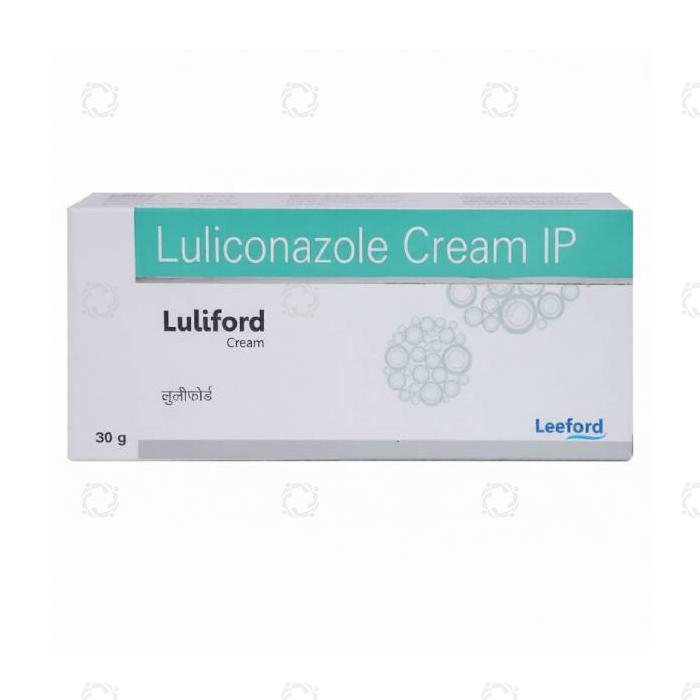
Luliford Cream - 30 g
Prescription Required
Compositions : Luliconazole 1% w/w
₹112.50
(Incl. GST)
MRP :
(Incl. GST)
MRP :
Out of stock
Delivery within 2 to 7 Working Days
Manufacture/Marketer: Leeford Healthcare Ltd
Door Step Delivery
Quick and Secure
No Hidden Charges
Pay only what's shown
18K Pincodes Served
With Trust & Reliability
Description
Luliford Cream is a topical antifungal medication specifically formulated to combat various fungal infections affecting the skin. The active ingredient in Luliford Cream is Luliconazole, which is known for its efficacy in treating conditions such as athlete’s foot (tinea pedis), jock itch (tinea cruris), and ringworm (tinea corporis). This cream works by targeting the cell membranes of the fungi, effectively killing them and alleviating the symptoms associated with these infections. The composition of Luliford Cream ensures that it penetrates the skin effectively, providing relief from itching, redness, and discomfort caused by fungal growth. It is essential to use Luliford Cream as directed by a healthcare professional to achieve optimal results. Typically, patients may notice improvement within 2 to 4 weeks of consistent use, depending on the severity of the infection. Maintaining proper hygiene, such as keeping the affected area clean and dry, can enhance the effectiveness of Luliford Cream. It is important to follow the prescribed dosage and duration to avoid potential side effects and ensure complete resolution of the infection. If symptoms persist or worsen, it is advisable to consult a healthcare provider for further evaluation and management. Overall, Luliford Cream serves as a reliable option for individuals seeking effective treatment for common fungal skin infections.
Product Details
Uses & Benefits
How Luliford Cream works
- Luliford Cream functions as an antifungal agent that targets and destroys fungi on the skin.
- The active ingredient, Luliconazole, disrupts the integrity of the fungal cell membrane.
- This mechanism leads to the death of the fungi, alleviating symptoms of infection.
- By eliminating the source of infection, Luliford Cream helps restore normal skin health.
How to use Luliford Cream
- Apply Luliford Cream externally only, as directed by your healthcare provider.
- Clean and dry the affected area thoroughly before application.
- Use a sufficient amount of cream to cover the infected area and at least 1 inch of surrounding skin.
- Wash your hands after applying the cream unless your hands are the affected area.
- Follow the prescribed dosage and frequency; typically applied once daily.
- Continue using Luliford Cream for the full duration recommended by your doctor, even if symptoms improve.
- Avoid using more than the prescribed amount to prevent increased side effects.
Lifestyle Advice
- Maintain good hygiene by washing the affected area regularly with soap and water.
- Keep the skin dry, especially in areas prone to moisture accumulation.
- Avoid sharing personal items like towels, socks, or shoes to prevent spreading the infection.
- Wear breathable clothing and footwear to reduce moisture buildup on the skin.
- Consider using antifungal powder in shoes to keep feet dry and prevent reinfection.
Safety Advice
Side Effects
- Common side effects may include:
- Burning sensation at the application site.
- Irritation or redness on the skin.
- Itching or discomfort in the treated area.
- Dryness of the skin surrounding the application site.
- If side effects persist or worsen, consult your healthcare provider.
- Seek immediate medical attention if you experience signs of an allergic reaction such as rash, swelling of lips or face, difficulty breathing, or severe nausea.
Precautions and Warnings
- Avoid contact with eyes; rinse immediately with water if contact occurs.
- Do not use Luliford Cream on broken or inflamed skin unless directed by a doctor.
- Inform your doctor if you have a history of allergies to antifungal medications.
- Use caution if you have liver or kidney issues; consult your doctor before use.
- Avoid alcohol consumption while using this medication to minimize potential interactions.
- Consult your healthcare provider if you are pregnant or breastfeeding before using Luliford Cream.
FAQs
1. Is Luliford Cream safe for everyone?
Luliford Cream is generally safe for most individuals; however, it is advisable to consult a healthcare provider before use if you are pregnant, breastfeeding, or have a history of allergic reactions.
2. How long should I use Luliford Cream?
It is recommended to use Luliford Cream for the duration prescribed by your doctor, typically 2 to 4 weeks, even if symptoms improve.
3. Can I use Luliford Cream with other medications?
While Luliford Cream is not likely to interact with oral medications, it is best to inform your doctor about any other treatments you are using.
4. What should I do if I miss a dose?
If you miss a dose of Luliford Cream, apply it as soon as you remember. If it's almost time for your next dose, skip the missed dose and resume your regular schedule.
5. How should I store Luliford Cream?
Store Luliford Cream at room temperature away from direct sunlight and moisture. Keep it out of reach of children.
6. What are common side effects of Luliford Cream?
Common side effects include burning sensation, irritation, itching, redness at the application site, and dry skin.
7. When should I seek medical help while using Luliford Cream?
Seek medical attention if you experience severe side effects or signs of an allergic reaction such as rash, swelling, or difficulty breathing.
Luliford Cream is generally safe for most individuals; however, it is advisable to consult a healthcare provider before use if you are pregnant, breastfeeding, or have a history of allergic reactions.
2. How long should I use Luliford Cream?
It is recommended to use Luliford Cream for the duration prescribed by your doctor, typically 2 to 4 weeks, even if symptoms improve.
3. Can I use Luliford Cream with other medications?
While Luliford Cream is not likely to interact with oral medications, it is best to inform your doctor about any other treatments you are using.
4. What should I do if I miss a dose?
If you miss a dose of Luliford Cream, apply it as soon as you remember. If it's almost time for your next dose, skip the missed dose and resume your regular schedule.
5. How should I store Luliford Cream?
Store Luliford Cream at room temperature away from direct sunlight and moisture. Keep it out of reach of children.
6. What are common side effects of Luliford Cream?
Common side effects include burning sensation, irritation, itching, redness at the application site, and dry skin.
7. When should I seek medical help while using Luliford Cream?
Seek medical attention if you experience severe side effects or signs of an allergic reaction such as rash, swelling, or difficulty breathing.
Instructions
Directions for Use
Use only as prescribed by your physician.
Storage and Disposal
Please refer to the product label for storage information.
More Information
| SKU | PROD933 |
|---|---|
| Country of Manufacture | India |
| Manufacturer Address | Leeford Healthcare Ltd |
| Return/Buy Back policy | Non-returnable |
| Prescription Required | Yes |
| Storage | Please refer to the product label for storage information. |
| Seller | Kogland Commerce Pvt Ltd (TN) |
Luliford Cream is a topical antifungal medication specifically formulated to combat various fungal infections affecting the skin. The active ingredient in Luliford Cream is Luliconazole, which is known for its efficacy in treating conditions such as athlete’s foot (tinea pedis), jock itch (tinea cruris), and ringworm (tinea corporis). This cream works by targeting the cell membranes of the fungi, effectively killing them and alleviating the symptoms associated with these infections. The composition of Luliford Cream ensures that it penetrates the skin effectively, providing relief from itching, redness, and discomfort caused by fungal growth. It is essential to use Luliford Cream as directed by a healthcare professional to achieve optimal results. Typically, patients may notice improvement within 2 to 4 weeks of consistent use, depending on the severity of the infection. Maintaining proper hygiene, such as keeping the affected area clean and dry, can enhance the effectiveness of Luliford Cream. It is important to follow the prescribed dosage and duration to avoid potential side effects and ensure complete resolution of the infection. If symptoms persist or worsen, it is advisable to consult a healthcare provider for further evaluation and management. Overall, Luliford Cream serves as a reliable option for individuals seeking effective treatment for common fungal skin infections.
Uses & Benefits
- Treats athlete’s foot (tinea pedis) effectively.
- Addresses jock itch (tinea cruris) symptoms.
- Helps eliminate ringworm (tinea corporis) infections.
- Reduces itching, redness, and discomfort associated with fungal infections.
- Promotes healing by killing the fungi responsible for skin infections.
- Improves skin comfort and appearance over time.
- Prevents recurrence of fungal infections when used as directed.
- Suitable for external use only, minimizing systemic side effects.
How Luliford Cream works
- Luliford Cream functions as an antifungal agent that targets and destroys fungi on the skin.
- The active ingredient, Luliconazole, disrupts the integrity of the fungal cell membrane.
- This mechanism leads to the death of the fungi, alleviating symptoms of infection.
- By eliminating the source of infection, Luliford Cream helps restore normal skin health.
How to use Luliford Cream
- Apply Luliford Cream externally only, as directed by your healthcare provider.
- Clean and dry the affected area thoroughly before application.
- Use a sufficient amount of cream to cover the infected area and at least 1 inch of surrounding skin.
- Wash your hands after applying the cream unless your hands are the affected area.
- Follow the prescribed dosage and frequency; typically applied once daily.
- Continue using Luliford Cream for the full duration recommended by your doctor, even if symptoms improve.
- Avoid using more than the prescribed amount to prevent increased side effects.
Lifestyle Advice
- Maintain good hygiene by washing the affected area regularly with soap and water.
- Keep the skin dry, especially in areas prone to moisture accumulation.
- Avoid sharing personal items like towels, socks, or shoes to prevent spreading the infection.
- Wear breathable clothing and footwear to reduce moisture buildup on the skin.
- Consider using antifungal powder in shoes to keep feet dry and prevent reinfection.
Side Effects
- Common side effects may include:
- Burning sensation at the application site.
- Irritation or redness on the skin.
- Itching or discomfort in the treated area.
- Dryness of the skin surrounding the application site.
- If side effects persist or worsen, consult your healthcare provider.
- Seek immediate medical attention if you experience signs of an allergic reaction such as rash, swelling of lips or face, difficulty breathing, or severe nausea.
Precautions and Warnings
- Avoid contact with eyes; rinse immediately with water if contact occurs.
- Do not use Luliford Cream on broken or inflamed skin unless directed by a doctor.
- Inform your doctor if you have a history of allergies to antifungal medications.
- Use caution if you have liver or kidney issues; consult your doctor before use.
- Avoid alcohol consumption while using this medication to minimize potential interactions.
- Consult your healthcare provider if you are pregnant or breastfeeding before using Luliford Cream.
1. Is Luliford Cream safe for everyone?
Luliford Cream is generally safe for most individuals; however, it is advisable to consult a healthcare provider before use if you are pregnant, breastfeeding, or have a history of allergic reactions.
2. How long should I use Luliford Cream?
It is recommended to use Luliford Cream for the duration prescribed by your doctor, typically 2 to 4 weeks, even if symptoms improve.
3. Can I use Luliford Cream with other medications?
While Luliford Cream is not likely to interact with oral medications, it is best to inform your doctor about any other treatments you are using.
4. What should I do if I miss a dose?
If you miss a dose of Luliford Cream, apply it as soon as you remember. If it's almost time for your next dose, skip the missed dose and resume your regular schedule.
5. How should I store Luliford Cream?
Store Luliford Cream at room temperature away from direct sunlight and moisture. Keep it out of reach of children.
6. What are common side effects of Luliford Cream?
Common side effects include burning sensation, irritation, itching, redness at the application site, and dry skin.
7. When should I seek medical help while using Luliford Cream?
Seek medical attention if you experience severe side effects or signs of an allergic reaction such as rash, swelling, or difficulty breathing.
Luliford Cream is generally safe for most individuals; however, it is advisable to consult a healthcare provider before use if you are pregnant, breastfeeding, or have a history of allergic reactions.
2. How long should I use Luliford Cream?
It is recommended to use Luliford Cream for the duration prescribed by your doctor, typically 2 to 4 weeks, even if symptoms improve.
3. Can I use Luliford Cream with other medications?
While Luliford Cream is not likely to interact with oral medications, it is best to inform your doctor about any other treatments you are using.
4. What should I do if I miss a dose?
If you miss a dose of Luliford Cream, apply it as soon as you remember. If it's almost time for your next dose, skip the missed dose and resume your regular schedule.
5. How should I store Luliford Cream?
Store Luliford Cream at room temperature away from direct sunlight and moisture. Keep it out of reach of children.
6. What are common side effects of Luliford Cream?
Common side effects include burning sensation, irritation, itching, redness at the application site, and dry skin.
7. When should I seek medical help while using Luliford Cream?
Seek medical attention if you experience severe side effects or signs of an allergic reaction such as rash, swelling, or difficulty breathing.
Directions for Use
Use only as prescribed by your physician.
Storage and Disposal
Please refer to the product label for storage information.
| SKU | PROD933 |
|---|---|
| Country of Manufacture | India |
| Manufacturer Address | Leeford Healthcare Ltd |
| Return/Buy Back policy | Non-returnable |
| Prescription Required | Yes |
| Storage | Please refer to the product label for storage information. |
| Seller | Kogland Commerce Pvt Ltd (TN) |
Door Step Delivery
Quick and Secure
No Hidden Charges
Pay only what's shown
18K Pincodes Served
With Trust & Reliability
Customer Reviews
No reviews yet
Be the first to share your thoughts. Honest feedback helps other shoppers and us serve you better.
Write Your Own Review
Only registered users can write reviews. Please Sign in or create an account