


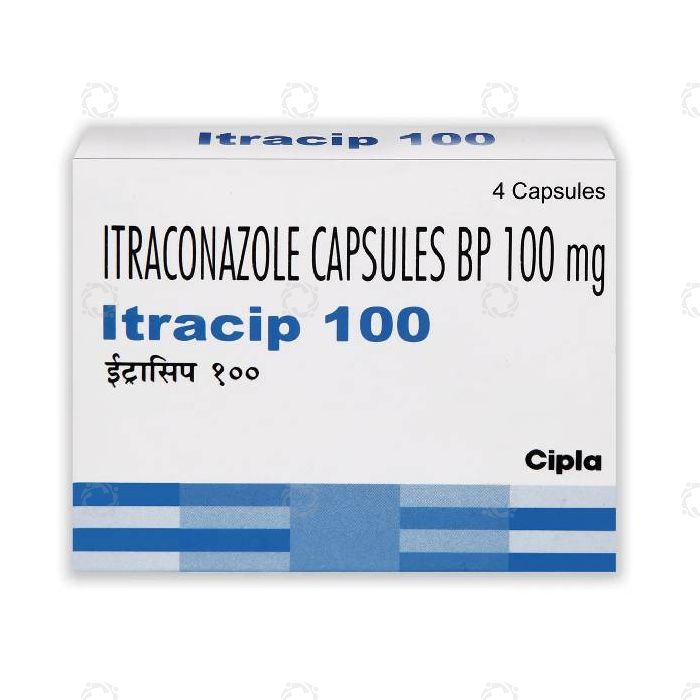

- Itracip 100 mg Capsule works well to treat a number of fungal infections.
- This medicine works especially well for infections caused by Trichophyton spp., Microsporum spp., and Epidermophyton floccosum.
- People who take Itracip 100 mg Capsule can expect to feel better from the symptoms of fungal infections.
- It is used to treat infections of the fingernails and toenails that won't go away.
- The Itracip 100 mg Capsule also works against vaginal candidiasis, which helps with pain.
- When taken as directed, this antifungal medicine helps stop infections from coming back.
- By stopping fungi from growing, Itracip 100 mg Capsule speeds up the healing process.
- Itracip 100 mg Capsule can help people with weakened immune systems control opportunistic fungal infections.
- The Itracip 100 mg Capsule helps your overall health by treating fungal problems that could make other medical conditions worse.
- This medicine is very important for treating skin infections like ringworm and athlete's foot.
- Following the directions for taking Itracip 100 mg Capsule will help you treat fungal infections effectively.
- Patients should stick to the same dosing schedule with Itracip 100 mg Capsule for the best results.
- Itracip 100 mg Capsule can be an important part of a full treatment plan for fungal infections.
- Patients can lower their risk of getting drug-resistant fungi by taking the full course of Itracip 100 mg Capsule.
- This antifungal drug is very important for people who keep getting yeast infections.
How Itracip 100 mg Capsule Works
- Itraconazole is the main active ingredient in Itracip 100 mg Capsule, and it works well against fungal cells.
- Itracip 100 mg Capsule stops the production of ergosterol, which is an important part of fungal cell membranes.
- This disruption makes the fungal cell membrane more permeable, which kills the cell.
How to use Itracip 100 mg Capsule
- Following the correct dosage and administration instructions is very important for the Itracip 100 mg Capsule to work. Follow your doctor's instructions exactly when you take Itracip 100 mg Capsule.
- Do not chew or crush the capsule; instead, swallow it whole with a glass of water.
- Taking Itracip 100 mg Capsule with food is a good idea because it helps the body absorb the medicine better and makes your stomach feel better.
- Depending on the type and severity of the infection, the dosage may change. Make sure to follow your doctor's instructions exactly.
- For most fungal infections, it takes Itracip 100 mg Capsule for treatment for a few days to a few weeks.
- To get the most out of Itracip 100 mg Capsule, stick to a regular schedule and try to take it at the same time every day.
- If you forget to take an Itracip 100 mg Capsule, take it as soon as you remember. But if it's almost time for your next dose, skip the missed dose and keep taking it as usual.
- Don't take two doses to make up for one you missed; this could make side effects more likely.
Lifestyle Advice
- While taking Itracip 100 mg Capsule, eat a balanced diet full of nutrients to help your immune system.
- Drink a lot of fluids throughout the day to stay hydrated. This will help your overall health while you are getting treatment.
- Stay away from alcohol because it could make the side effects of Itracip 100 mg Capsule worse.
- While taking Itracip 100 mg Capsule, make sure to keep your hygiene up to avoid getting sick again or spreading fungal infections.
- During treatment, make sure to get regular exercise to improve your immune system and overall health.
- Keep an eye on how your body reacts to Itracip 100 mg Capsule and let your doctor know right away if you notice any strange symptoms.
FAQs
1. What does Itracip 100 mg Capsule do?
Itracip 100 mg Capsule is used to treat a number of fungal infections, such as those caused by Trichophyton spp., Microsporum spp., and Epidermophyton floccosum. It works well for problems like athlete's foot, ringworm, and vaginal candidiasis.
2. For how long should I take the Itracip 100 mg Capsule?
The length of time you need to take Itracip 100 mg Capsule depends on the type of infection you have. For instance, skin infections might take about 30 days to heal, while vaginal candidiasis might only take a few days.
3. What do I do if I forget to take my medicine?
If you forget to take your Itracip 100 mg Capsule, take it as soon as you remember. If it's almost time for your next dose, don't take the missed dose and just keep taking your regular doses.
4. If my symptoms get better, can I stop taking Itracip 100 mg Capsule?
No, you should finish the whole course of Itracip 100 mg Capsule even if your symptoms get better. If you stop treatment early, you might not get all of it and the infection might come back.
5. Why would my doctor want to do blood tests while I'm taking Itracip 100 mg Capsule?
Since Itracip 100 mg Capsule can harm the liver, blood tests may be done to keep an eye on how well the liver is working. During treatment, it's very important to tell your doctor about any symptoms you have, such as jaundice or stomach pain.
6. Can you safely take antacids with Itracip 100 mg Capsule?
You shouldn't take antacids within two hours of or after taking Itracip 100 mg Capsule because they can make it harder for your body to absorb the drug.
7. Is it possible for Itracip 100 mg Capsule to make drugs less effective?
If you don't finish the full course of Itracip 100 mg Capsule, you may become resistant to the drug. To avoid resistance, it's important to do what your doctor says.