


- Helps in controlling blood sugar levels in patients with type 2 diabetes mellitus.
- Reduces the risk of diabetes-related complications.
- Improves insulin sensitivity and promotes insulin secretion.
- Can be used in conjunction with diet and exercise for better glycemic control.
- Effective for patients who do not achieve adequate control with Metformin alone.
- May help in weight management as part of a comprehensive diabetes care plan.
- Convenient oral administration for ease of use.
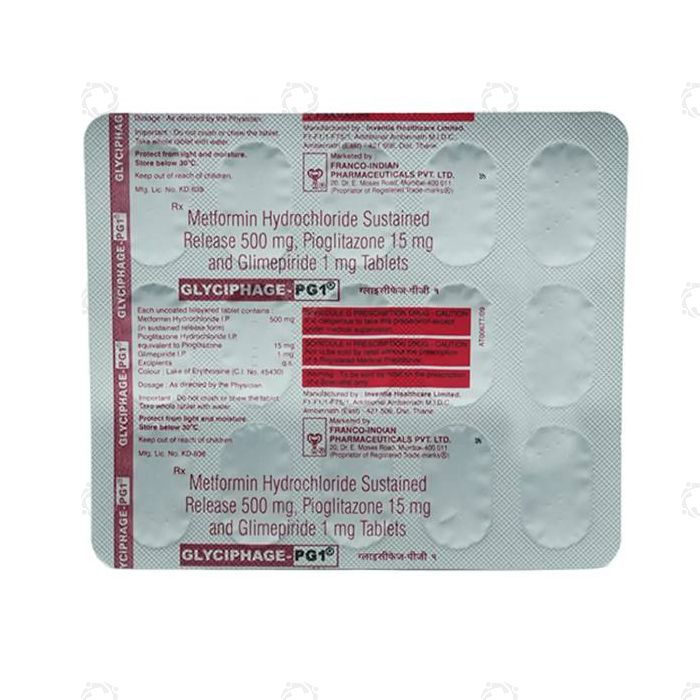
Glyciphage PG 1 Tablet - Strip of 15
Prescription Required
Compositions : Glimepiride 1mg + Metformin 500mg + Pioglitazone 15mg
₹151.22
(Incl. GST)
MRP :
(Incl. GST)
MRP :
Out of stock
Delivery within 2 to 7 Working Days
Manufacture/Marketer: Franco Indian Pharmaceuticals Pvt Ltd
Door Step Delivery
Quick and Secure
No Hidden Charges
Pay only what's shown
18K Pincodes Served
With Trust & Reliability
Description
Glyciphage PG 1 Tablet is a pharmaceutical product primarily used in the management of type 2 diabetes mellitus. This medication combines two active ingredients: Metformin and Glimepiride, which work synergistically to help control blood sugar levels in patients with diabetes. Metformin is a biguanide that decreases hepatic glucose production and increases insulin sensitivity, while Glimepiride is a sulfonylurea that stimulates insulin secretion from the pancreas. Together, these components provide a comprehensive approach to managing blood glucose levels, making Glyciphage PG 1 Tablet an effective option for individuals struggling to maintain optimal glycemic control. The formulation is designed to be taken orally, and it is typically prescribed as part of a broader diabetes management plan that includes dietary modifications and physical activity. Glyciphage PG 1 Tablet is particularly beneficial for patients who have not achieved adequate glycemic control with Metformin alone or those who require additional therapy to manage their diabetes effectively. By addressing both insulin resistance and secretion, Glyciphage PG 1 Tablet helps to reduce the risk of diabetes-related complications, thereby improving the overall quality of life for patients. It is essential for users to follow their healthcare provider's instructions regarding the use of Glyciphage PG 1 Tablet to ensure optimal results and minimize potential side effects. Regular monitoring of blood glucose levels is also recommended to assess the effectiveness of the treatment and make necessary adjustments.
Product Details
Uses & Benefits
How Glyciphage PG 1 Tablet works
- Metformin decreases hepatic glucose production, reducing blood sugar levels.
- Increases insulin sensitivity in peripheral tissues, enhancing glucose uptake.
- Glimepiride stimulates pancreatic beta cells to release more insulin.
- Works synergistically to provide better glycemic control than either drug alone.
- Helps in reducing postprandial (after meal) blood sugar spikes.
How to use Glyciphage PG 1 Tablet
- Take Glyciphage PG 1 Tablet orally with meals to minimize gastrointestinal side effects.
- The usual starting dose is one tablet daily, but your doctor may adjust this based on your blood sugar levels.
- Dosage may be increased gradually as needed, typically not exceeding the maximum recommended dose.
- It is important to take the tablet at the same time each day for consistency.
- Do not crush or chew the tablet; swallow it whole with water.
- Continue taking Glyciphage PG 1 Tablet as prescribed, even if you feel well.
- Regular monitoring of blood glucose levels is essential to assess treatment effectiveness.
Lifestyle Advice
- Maintain a balanced diet rich in whole grains, fruits, and vegetables while limiting sugars and refined carbohydrates.
- Engage in regular physical activity, aiming for at least 150 minutes of moderate exercise per week.
- Monitor your blood sugar levels regularly to understand how your body responds to different foods and activities.
- Avoid excessive alcohol consumption, as it can affect blood sugar levels and interact with medications.
- Stay hydrated by drinking plenty of water throughout the day.
- Consider working with a dietitian or diabetes educator for personalized meal planning and lifestyle strategies.
Safety Advice
Side Effects
- Common side effects include nausea, vomiting, diarrhea, abdominal pain, and loss of appetite.
- Some patients may experience hypoglycemia (low blood sugar), especially if meals are skipped or delayed.
- Serious side effects may include lactic acidosis, which is a rare but severe condition requiring immediate medical attention.
- If you experience symptoms such as unusual tiredness, muscle pain, difficulty breathing, or stomach pain, seek medical help promptly.
- Allergic reactions may occur; watch for signs like rash, itching, or swelling of the face/tongue/throat.
Precautions and Warnings
- Avoid using Glyciphage PG 1 Tablet if you have a known allergy to Metformin or Glimepiride.
- Patients with severe kidney or liver impairment should not use this medication.
- Alcohol consumption should be limited as it can increase the risk of lactic acidosis and hypoglycemia.
- Consult your doctor if you are pregnant or breastfeeding before using this medication.
- Monitor your blood sugar levels regularly to prevent hypoglycemia.
- If you experience symptoms of low blood sugar such as dizziness, sweating, or confusion, seek immediate assistance.
FAQs
1. Is Glyciphage PG 1 Tablet safe for everyone?
Glyciphage PG 1 Tablet may not be suitable for individuals with certain medical conditions such as severe kidney or liver disease. Always consult your healthcare provider before starting any new medication.
2. What should I do if I miss a dose of Glyciphage PG 1 Tablet?
If you miss a dose, take it as soon as you remember. If it's almost time for your next dose, skip the missed dose and continue with your regular schedule. Do not double up on doses.
3. Can I take Glyciphage PG 1 Tablet with other medications?
Glyciphage PG 1 Tablet may interact with other medications. Always inform your healthcare provider about all medications you are taking to avoid potential interactions.
4. How should I store Glyciphage PG 1 Tablet?
Store Glyciphage PG 1 Tablet at room temperature away from moisture and heat. Keep it out of reach of children.
5. What are the common side effects of Glyciphage PG 1 Tablet?
Common side effects may include nausea, vomiting, diarrhea, and abdominal discomfort. If you experience severe side effects, contact your healthcare provider immediately.
6. Can pregnant or breastfeeding women use Glyciphage PG 1 Tablet?
Pregnant or breastfeeding women should consult their healthcare provider before using Glyciphage PG 1 Tablet, as its safety during pregnancy and lactation has not been fully established.
Instructions
Directions for Use
Use only as prescribed by your physician.
Storage and Disposal
Please refer to the product label for storage information.
More Information
| SKU | 578080 |
|---|---|
| Country of Manufacture | India |
| Manufacturer Address | Franco Indian Pharmaceuticals Pvt Ltd |
| Return/Buy Back policy | Non-returnable |
| Prescription Required | Yes |
| Storage | Please refer to the product label for storage information. |
| Seller | Kogland Commerce Pvt Ltd (TN) |
Glyciphage PG 1 Tablet is a pharmaceutical product primarily used in the management of type 2 diabetes mellitus. This medication combines two active ingredients: Metformin and Glimepiride, which work synergistically to help control blood sugar levels in patients with diabetes. Metformin is a biguanide that decreases hepatic glucose production and increases insulin sensitivity, while Glimepiride is a sulfonylurea that stimulates insulin secretion from the pancreas. Together, these components provide a comprehensive approach to managing blood glucose levels, making Glyciphage PG 1 Tablet an effective option for individuals struggling to maintain optimal glycemic control. The formulation is designed to be taken orally, and it is typically prescribed as part of a broader diabetes management plan that includes dietary modifications and physical activity. Glyciphage PG 1 Tablet is particularly beneficial for patients who have not achieved adequate glycemic control with Metformin alone or those who require additional therapy to manage their diabetes effectively. By addressing both insulin resistance and secretion, Glyciphage PG 1 Tablet helps to reduce the risk of diabetes-related complications, thereby improving the overall quality of life for patients. It is essential for users to follow their healthcare provider's instructions regarding the use of Glyciphage PG 1 Tablet to ensure optimal results and minimize potential side effects. Regular monitoring of blood glucose levels is also recommended to assess the effectiveness of the treatment and make necessary adjustments.
Uses & Benefits
- Helps in controlling blood sugar levels in patients with type 2 diabetes mellitus.
- Reduces the risk of diabetes-related complications.
- Improves insulin sensitivity and promotes insulin secretion.
- Can be used in conjunction with diet and exercise for better glycemic control.
- Effective for patients who do not achieve adequate control with Metformin alone.
- May help in weight management as part of a comprehensive diabetes care plan.
- Convenient oral administration for ease of use.
How Glyciphage PG 1 Tablet works
- Metformin decreases hepatic glucose production, reducing blood sugar levels.
- Increases insulin sensitivity in peripheral tissues, enhancing glucose uptake.
- Glimepiride stimulates pancreatic beta cells to release more insulin.
- Works synergistically to provide better glycemic control than either drug alone.
- Helps in reducing postprandial (after meal) blood sugar spikes.
How to use Glyciphage PG 1 Tablet
- Take Glyciphage PG 1 Tablet orally with meals to minimize gastrointestinal side effects.
- The usual starting dose is one tablet daily, but your doctor may adjust this based on your blood sugar levels.
- Dosage may be increased gradually as needed, typically not exceeding the maximum recommended dose.
- It is important to take the tablet at the same time each day for consistency.
- Do not crush or chew the tablet; swallow it whole with water.
- Continue taking Glyciphage PG 1 Tablet as prescribed, even if you feel well.
- Regular monitoring of blood glucose levels is essential to assess treatment effectiveness.
Lifestyle Advice
- Maintain a balanced diet rich in whole grains, fruits, and vegetables while limiting sugars and refined carbohydrates.
- Engage in regular physical activity, aiming for at least 150 minutes of moderate exercise per week.
- Monitor your blood sugar levels regularly to understand how your body responds to different foods and activities.
- Avoid excessive alcohol consumption, as it can affect blood sugar levels and interact with medications.
- Stay hydrated by drinking plenty of water throughout the day.
- Consider working with a dietitian or diabetes educator for personalized meal planning and lifestyle strategies.
Side Effects
- Common side effects include nausea, vomiting, diarrhea, abdominal pain, and loss of appetite.
- Some patients may experience hypoglycemia (low blood sugar), especially if meals are skipped or delayed.
- Serious side effects may include lactic acidosis, which is a rare but severe condition requiring immediate medical attention.
- If you experience symptoms such as unusual tiredness, muscle pain, difficulty breathing, or stomach pain, seek medical help promptly.
- Allergic reactions may occur; watch for signs like rash, itching, or swelling of the face/tongue/throat.
Precautions and Warnings
- Avoid using Glyciphage PG 1 Tablet if you have a known allergy to Metformin or Glimepiride.
- Patients with severe kidney or liver impairment should not use this medication.
- Alcohol consumption should be limited as it can increase the risk of lactic acidosis and hypoglycemia.
- Consult your doctor if you are pregnant or breastfeeding before using this medication.
- Monitor your blood sugar levels regularly to prevent hypoglycemia.
- If you experience symptoms of low blood sugar such as dizziness, sweating, or confusion, seek immediate assistance.
1. Is Glyciphage PG 1 Tablet safe for everyone?
Glyciphage PG 1 Tablet may not be suitable for individuals with certain medical conditions such as severe kidney or liver disease. Always consult your healthcare provider before starting any new medication.
2. What should I do if I miss a dose of Glyciphage PG 1 Tablet?
If you miss a dose, take it as soon as you remember. If it's almost time for your next dose, skip the missed dose and continue with your regular schedule. Do not double up on doses.
3. Can I take Glyciphage PG 1 Tablet with other medications?
Glyciphage PG 1 Tablet may interact with other medications. Always inform your healthcare provider about all medications you are taking to avoid potential interactions.
4. How should I store Glyciphage PG 1 Tablet?
Store Glyciphage PG 1 Tablet at room temperature away from moisture and heat. Keep it out of reach of children.
5. What are the common side effects of Glyciphage PG 1 Tablet?
Common side effects may include nausea, vomiting, diarrhea, and abdominal discomfort. If you experience severe side effects, contact your healthcare provider immediately.
6. Can pregnant or breastfeeding women use Glyciphage PG 1 Tablet?
Pregnant or breastfeeding women should consult their healthcare provider before using Glyciphage PG 1 Tablet, as its safety during pregnancy and lactation has not been fully established.
Glyciphage PG 1 Tablet may not be suitable for individuals with certain medical conditions such as severe kidney or liver disease. Always consult your healthcare provider before starting any new medication.
2. What should I do if I miss a dose of Glyciphage PG 1 Tablet?
If you miss a dose, take it as soon as you remember. If it's almost time for your next dose, skip the missed dose and continue with your regular schedule. Do not double up on doses.
3. Can I take Glyciphage PG 1 Tablet with other medications?
Glyciphage PG 1 Tablet may interact with other medications. Always inform your healthcare provider about all medications you are taking to avoid potential interactions.
4. How should I store Glyciphage PG 1 Tablet?
Store Glyciphage PG 1 Tablet at room temperature away from moisture and heat. Keep it out of reach of children.
5. What are the common side effects of Glyciphage PG 1 Tablet?
Common side effects may include nausea, vomiting, diarrhea, and abdominal discomfort. If you experience severe side effects, contact your healthcare provider immediately.
6. Can pregnant or breastfeeding women use Glyciphage PG 1 Tablet?
Pregnant or breastfeeding women should consult their healthcare provider before using Glyciphage PG 1 Tablet, as its safety during pregnancy and lactation has not been fully established.
Directions for Use
Use only as prescribed by your physician.
Storage and Disposal
Please refer to the product label for storage information.
| SKU | 578080 |
|---|---|
| Country of Manufacture | India |
| Manufacturer Address | Franco Indian Pharmaceuticals Pvt Ltd |
| Return/Buy Back policy | Non-returnable |
| Prescription Required | Yes |
| Storage | Please refer to the product label for storage information. |
| Seller | Kogland Commerce Pvt Ltd (TN) |
Door Step Delivery
Quick and Secure
No Hidden Charges
Pay only what's shown
18K Pincodes Served
With Trust & Reliability
Customer Reviews
No reviews yet
Be the first to share your thoughts. Honest feedback helps other shoppers and us serve you better.
Write Your Own Review
Only registered users can write reviews. Please Sign in or create an account