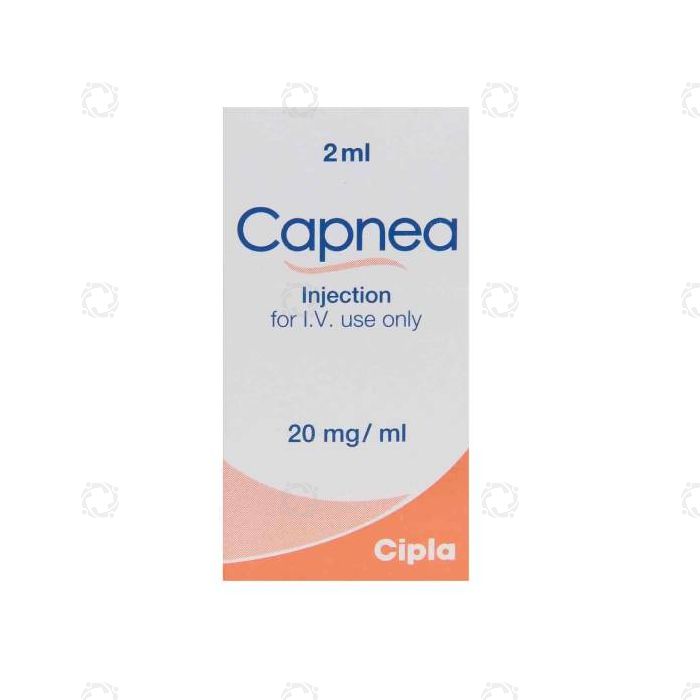
Capnea Injection is a medicine that treats apnoea of prematurity, a serious condition that affects babies who are born too early. This condition causes breathing to stop and start a lot because the brain's respiratory control centres aren't fully developed. Capnea Injection is very important for stimulating these parts of the brain, which helps newborns who are at risk breathe normally. Caffeine citrate, a xanthine derivative that works as a respiratory stimulant, is the main ingredient in Capnea Injection. Capnea Injection helps babies breathe more steadily and consistently by making the central nervous system more responsive. This lowers the frequency and severity of apnoea episodes. Capnea Injection is a respiratory stimulant, which makes it an important part of neonatal care. The main purpose of Capnea Injection is to help premature babies who have trouble breathing so that they can get the help they need to thrive in their first few days. In short, Capnea Injection is an important treatment for apnoea of prematurity because it helps newborns right away and has long-term benefits. Capnea Injection is a very important tool in neonatal medicine because of its unique composition and targeted action. It helps premature babies breathe better.
Product Details
Capnea Injection works well to treat apnoea of prematurity, which is when premature babies have trouble breathing.
This medicine makes the brain's breathing centres work better, which helps newborns breathe normally.
Capnea Injection lowers the number of apnoea episodes, which makes the respiratory system more stable overall.
Capnea Injection helps you breathe better by making your muscles stronger and making your diaphragm less tired.
Capnea Injection is given under the watchful eye of a doctor to make sure that it is safe and effective.
This therapy is very important for babies who are born too early and whose lungs are not fully developed.
Capnea Injection helps stop problems that can happen when apnoea isn't treated, like hypoxia and bradycardia.
It is especially good for babies born before 28 weeks of pregnancy, since they are more likely to have apnoea.
Capnea Injection can be part of a full care plan for premature babies that takes care of many different parts of their health.
The formulation is made to be given through an IV, which lets for accurate dosing and quick action.
Capnea Injection has been shown to make things better in neonatal intensive care units (NICUs).
This medicine is very important for helping premature babies grow by making sure they get enough oxygen during important growth times.
How Capnea Injection Works
Capnea Injection is a respiratory stimulant made just for babies who are born too early. Capnea Injection makes the brain more sensitive to carbon dioxide levels by blocking some natural substances in the body. This is important for controlling breathing. Caffeine citrate is the main active ingredient in Capnea Injection. It works on the central nervous system to make breathing easier.
How to Use Capnea Injection
Only trained medical professionals should give Capnea Injection in a controlled setting. To make sure it works and is safe, it must be used correctly. The amount of Capnea Injection given to a baby depends on how much they weigh and how sick they are.
Capnea Injection is usually given through an IV, which lets it get into the blood right away.
The frequency of administration may vary; however, it is often given multiple times per day as needed.
During treatment, healthcare professionals will keep a close eye on the baby and change the dosages as needed.
Capnea Injection treatment usually lasts between 10 and 12 days, depending on how well the baby responds and what the doctors say.
If the mother is breastfeeding while the baby gets Capnea Injection, she should not drink or eat anything that contains caffeine.
Lifestyle Advice
Keep the area around the baby getting the Capnea Injection calm to lower stress and help them breathe better.
Make sure that both the mother and the baby drink enough water during treatment to help them both get better and stay healthy.
Stay away from secondhand smoke and other things that can irritate your lungs, as they could make your breathing problems worse.
While using Capnea Injection, make sure to follow your healthcare provider's advice on feeding times and methods.
Make sure to keep regular follow-up appointments to check on the baby's progress and change the treatment if needed.
FAQs
1. What is Capnea Injection and why do they give it to babies? Capnea Injection is a drug given to premature babies who have apnoea of prematurity. This condition causes breathing to stop for a short time because the body's respiratory control systems aren't fully developed. 2. What does Capnea Injection do for babies who are born too early? Capnea Injection activates the central nervous system and makes the brain's breathing centre more responsive. This action helps lower the number of apnoea episodes by making the muscles stronger and lessening the fatigue of the diaphragm. 3. Who shouldn't get the Capnea Injection? Infants with known allergies or hypersensitivity to caffeine or any components of Capnea Injection should avoid this medication. 4. What are the most dangerous things that could happen with Capnea Injection in newborns? Necrotising enterocolitis, a serious bowel disease, is one of the biggest risks of Capnea Injection. It is very important to keep a close eye out for signs like swelling in the stomach or unusual tiredness. 5. Is it possible to use Capnea Injection for a long time? Capnea Injection is only meant to be used for a short time, usually 10 to 12 days. We don't know if it's safe to use for a long time or in other situations. 6. What steps should doctors take before giving someone a Capnea Injection? Before giving Capnea Injection, doctors should make sure that there are no other reasons for apnoea and check the caffeine levels in babies who have already had caffeine. 7. What signs should carers look for while their baby is getting Capnea Injection? While their baby is getting the Capnea Injection, carers should watch for signs of serious problems like vomiting or stomach swelling.
Safety Advice
Side Effects
Capnea Injection is usually well-tolerated, but some people may have side effects. To deal with any bad reactions properly, monitoring is very important.
Some common side effects are mild delirium, trouble sleeping, needing to urinate a lot, dehydration, fast heart rate, and fever.
If side effects last longer or get worse, you should see a doctor for more tests.
Necrotising enterocolitis is a serious side effect that carers should look out for. Symptoms include stomach bloating or bloody stools.
Precautions and Warnings
If a baby is known to be sensitive to caffeine or any of its parts, they should not get Capnea Injection.
Before starting treatment with Capnea Injection, it is important to check the person's hydration level and make sure that other possible causes of apnoea are not present.
There may be drug interactions with other drugs that affect how well the lungs work. Always tell your doctor about all the drugs you are taking.
FAQs
No content available for this section.
Instructions
Directions for Use
Use only as prescribed by your physician.
Storage and Disposal
Please refer to the product label for storage information.
More Information
SKU
535038
Country of Manufacture
India
Manufacturer Address
Cipla Ltd.
Return/Buy Back policy
Non-returnable
Prescription Required
Yes
Storage
Please refer to the product label for storage information.
Capnea Injection is a medicine that treats apnoea of prematurity, a serious condition that affects babies who are born too early. This condition causes breathing to stop and start a lot because the brain's respiratory control centres aren't fully developed. Capnea Injection is very important for stimulating these parts of the brain, which helps newborns who are at risk breathe normally. Caffeine citrate, a xanthine derivative that works as a respiratory stimulant, is the main ingredient in Capnea Injection. Capnea Injection helps babies breathe more steadily and consistently by making the central nervous system more responsive. This lowers the frequency and severity of apnoea episodes. Capnea Injection is a respiratory stimulant, which makes it an important part of neonatal care. The main purpose of Capnea Injection is to help premature babies who have trouble breathing so that they can get the help they need to thrive in their first few days. In short, Capnea Injection is an important treatment for apnoea of prematurity because it helps newborns right away and has long-term benefits. Capnea Injection is a very important tool in neonatal medicine because of its unique composition and targeted action. It helps premature babies breathe better.
Capnea Injection works well to treat apnoea of prematurity, which is when premature babies have trouble breathing.
This medicine makes the brain's breathing centres work better, which helps newborns breathe normally.
Capnea Injection lowers the number of apnoea episodes, which makes the respiratory system more stable overall.
Capnea Injection helps you breathe better by making your muscles stronger and making your diaphragm less tired.
Capnea Injection is given under the watchful eye of a doctor to make sure that it is safe and effective.
This therapy is very important for babies who are born too early and whose lungs are not fully developed.
Capnea Injection helps stop problems that can happen when apnoea isn't treated, like hypoxia and bradycardia.
It is especially good for babies born before 28 weeks of pregnancy, since they are more likely to have apnoea.
Capnea Injection can be part of a full care plan for premature babies that takes care of many different parts of their health.
The formulation is made to be given through an IV, which lets for accurate dosing and quick action.
Capnea Injection has been shown to make things better in neonatal intensive care units (NICUs).
This medicine is very important for helping premature babies grow by making sure they get enough oxygen during important growth times.
How Capnea Injection Works
Capnea Injection is a respiratory stimulant made just for babies who are born too early. Capnea Injection makes the brain more sensitive to carbon dioxide levels by blocking some natural substances in the body. This is important for controlling breathing. Caffeine citrate is the main active ingredient in Capnea Injection. It works on the central nervous system to make breathing easier.
How to Use Capnea Injection
Only trained medical professionals should give Capnea Injection in a controlled setting. To make sure it works and is safe, it must be used correctly. The amount of Capnea Injection given to a baby depends on how much they weigh and how sick they are.
Capnea Injection is usually given through an IV, which lets it get into the blood right away.
The frequency of administration may vary; however, it is often given multiple times per day as needed.
During treatment, healthcare professionals will keep a close eye on the baby and change the dosages as needed.
Capnea Injection treatment usually lasts between 10 and 12 days, depending on how well the baby responds and what the doctors say.
If the mother is breastfeeding while the baby gets Capnea Injection, she should not drink or eat anything that contains caffeine.
Lifestyle Advice
Keep the area around the baby getting the Capnea Injection calm to lower stress and help them breathe better.
Make sure that both the mother and the baby drink enough water during treatment to help them both get better and stay healthy.
Stay away from secondhand smoke and other things that can irritate your lungs, as they could make your breathing problems worse.
While using Capnea Injection, make sure to follow your healthcare provider's advice on feeding times and methods.
Make sure to keep regular follow-up appointments to check on the baby's progress and change the treatment if needed.
FAQs
1. What is Capnea Injection and why do they give it to babies? Capnea Injection is a drug given to premature babies who have apnoea of prematurity. This condition causes breathing to stop for a short time because the body's respiratory control systems aren't fully developed. 2. What does Capnea Injection do for babies who are born too early? Capnea Injection activates the central nervous system and makes the brain's breathing centre more responsive. This action helps lower the number of apnoea episodes by making the muscles stronger and lessening the fatigue of the diaphragm. 3. Who shouldn't get the Capnea Injection? Infants with known allergies or hypersensitivity to caffeine or any components of Capnea Injection should avoid this medication. 4. What are the most dangerous things that could happen with Capnea Injection in newborns? Necrotising enterocolitis, a serious bowel disease, is one of the biggest risks of Capnea Injection. It is very important to keep a close eye out for signs like swelling in the stomach or unusual tiredness. 5. Is it possible to use Capnea Injection for a long time? Capnea Injection is only meant to be used for a short time, usually 10 to 12 days. We don't know if it's safe to use for a long time or in other situations. 6. What steps should doctors take before giving someone a Capnea Injection? Before giving Capnea Injection, doctors should make sure that there are no other reasons for apnoea and check the caffeine levels in babies who have already had caffeine. 7. What signs should carers look for while their baby is getting Capnea Injection? While their baby is getting the Capnea Injection, carers should watch for signs of serious problems like vomiting or stomach swelling.
Side Effects
Capnea Injection is usually well-tolerated, but some people may have side effects. To deal with any bad reactions properly, monitoring is very important.
Some common side effects are mild delirium, trouble sleeping, needing to urinate a lot, dehydration, fast heart rate, and fever.
If side effects last longer or get worse, you should see a doctor for more tests.
Necrotising enterocolitis is a serious side effect that carers should look out for. Symptoms include stomach bloating or bloody stools.
Precautions and Warnings
If a baby is known to be sensitive to caffeine or any of its parts, they should not get Capnea Injection.
Before starting treatment with Capnea Injection, it is important to check the person's hydration level and make sure that other possible causes of apnoea are not present.
There may be drug interactions with other drugs that affect how well the lungs work. Always tell your doctor about all the drugs you are taking.
No content available for this section.
Directions for Use
Use only as prescribed by your physician.
Storage and Disposal
Please refer to the product label for storage information.
SKU
535038
Country of Manufacture
India
Manufacturer Address
Cipla Ltd.
Return/Buy Back policy
Non-returnable
Prescription Required
Yes
Storage
Please refer to the product label for storage information.